
By Andrew Stowers
Updated March 31, 2026
Penny stocks attract attention for one simple reason: the potential for large percentage gains. A stock moving from $1 to $2 represents a 100% return, which creates the illusion of easy profits. However, what most traders quickly learn is that penny stocks are one of the most difficult areas of the market to trade consistently — not because the setups don’t exist, but because the discipline required to act on them correctly is harder than it looks.
The difference between traders who profit from penny stocks and those who don’t comes down to structure. Traders who rely on hype, social media, or news-driven momentum tend to lose money. Traders who apply repeatable, rules-based criteria — specific volume thresholds, defined entry triggers, pre-set stop levels — can identify setups where the odds are meaningfully in their favor. This article explains what those criteria look like and how to apply them, including several constraints that most penny stock guides never mention. For a broader foundation in applying rules-based thinking across different trading vehicles, the Stock Trading Guide covers the underlying framework in depth.
What Are Penny Stocks?
Penny stocks are typically defined as stocks trading under $5 per share, though many active traders use a tighter definition of under $1 or under $2. These companies are usually small-cap or micro-cap firms with limited financial history, lower liquidity, and higher volatility than exchange-listed large-cap stocks.
One structural distinction that matters for traders is the difference between OTC (over-the-counter) penny stocks and those listed on major exchanges like the NYSE or Nasdaq. OTC stocks — traded on platforms such as OTC Markets or the Pink Sheets — face fewer reporting requirements and are significantly more susceptible to manipulation. Exchange-listed penny stocks, while still volatile, are subject to more stringent financial disclosure rules, which gives traders a more reliable information base. For most rules-based traders, restricting activity to exchange-listed penny stocks materially reduces the risk of encountering fraudulent price action.
Low share prices allow traders to control large share counts with relatively small amounts of capital, which is part of the appeal. A $5,000 position in a $0.50 stock represents 10,000 shares. But this same math means that a $0.10 adverse move costs $1,000 — a 20% loss — before slippage or spread is factored in. The volatility works symmetrically.
Why Most Traders Lose Money in Penny Stocks
The majority of traders approach penny stocks incorrectly. The three most common failure patterns are chasing hype, ignoring liquidity, and trading without a defined exit before entering.
Chasing Hype and News-Driven Moves
Many traders enter positions based on social media trends, newsletter alerts, or news headlines. By the time a penny stock is widely discussed, the move is typically already extended. Traders entering at that stage are often buying from the people who drove the price up — and who are already positioned to sell. Pump-and-dump schemes follow this exact pattern: a coordinated effort to generate interest and buying pressure in a thinly traded stock, followed by a rapid sell-off once the orchestrators exit. Recognizing a pump-and-dump in progress typically involves seeing a sudden spike in volume and price with no corresponding news from the company itself, often accompanied by promotional emails, social media posts, or message board activity. By the time these signals appear, the setup has already been compromised.
Ignoring the Pattern Day Trader Rule
One constraint that catches new traders off guard is the Pattern Day Trader (PDT) rule. Any trader using a margin account with less than $25,000 in equity is restricted to no more than three round-trip day trades within a rolling five-business-day window. Exceeding that limit results in a 90-day restriction on day trading. For traders who plan to use intraday penny stock strategies, this rule is not optional — it is a hard structural constraint that should shape position management and account sizing from the start. Traders operating below the $25,000 threshold who want more flexibility typically use cash accounts instead, though cash accounts come with their own settlement timing restrictions.
Poor Risk Management
The third common failure is entering without a defined risk-reward ratio. Without a clear exit strategy established before the trade is placed, losses escalate quickly in a volatile environment. Successful traders treat every position as a calculated risk with a specific downside defined in advance — not a gamble on where the price might go.
Rules-Based Criteria for High-Probability Penny Stock Setups
The goal when trading penny stocks is not to predict the next big winner. It is to identify setups where multiple factors align and the probability of a sustained move is higher than average. The following criteria form the basis of a rules-based screening process.
Minimum Volume Thresholds
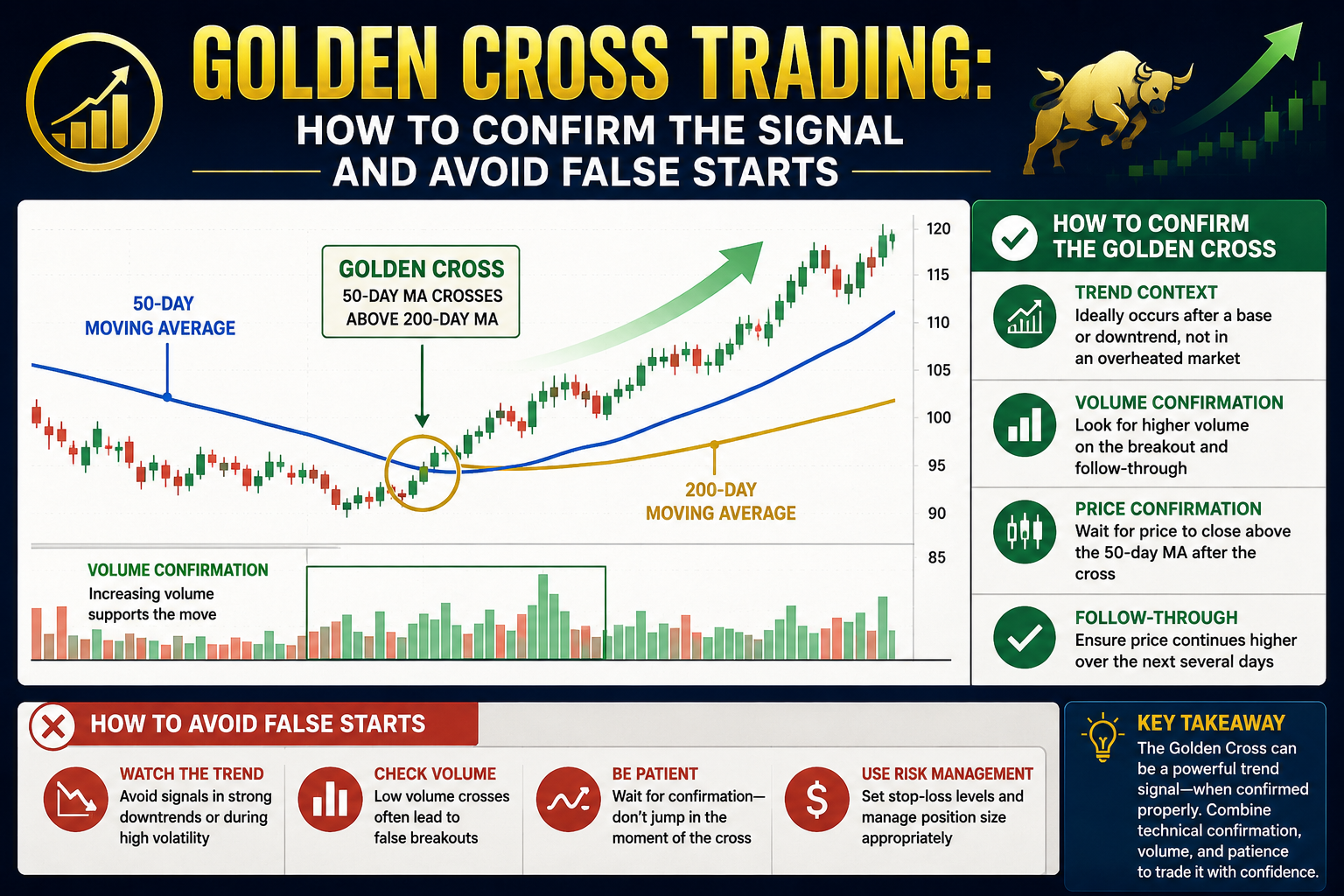
Volume is the single most important filter in penny stock trading. A stock with average daily volume below 500,000 shares is generally too illiquid to trade reliably — the bid-ask spread is wider, execution is slower, and exiting the position can be difficult if the price moves against you. For active setups, many traders require a minimum of 1 million shares of daily volume and look for days when volume is running at 2x to 3x the 20-day average as a confirmation that a meaningful move may be in progress. Without volume expansion, breakouts in penny stocks are unreliable and frequently reverse immediately.
Understanding low float stocks is relevant here. A stock with a low float — meaning fewer shares available for public trading — can experience larger percentage moves on the same absolute volume as a high-float stock. This amplifies both opportunity and risk. Low-float penny stocks with high relative volume are among the most volatile securities in the market, which is why position sizing discipline matters even more in this context.
Breakout Confirmation vs. False Moves
One of the biggest challenges in penny stock trading is distinguishing between real breakouts and false moves. Because these stocks are often driven by short-term momentum and speculative interest, price spikes can occur without strong underlying demand.
A high-probability breakout setup requires confirmation from at least two factors: price holding above a defined resistance level for more than one candle, and volume running materially above average at the time of the move. If a stock briefly breaks above resistance but immediately falls back below it on declining volume, that is a false breakout — not a trade. Experienced traders rarely act on price movement alone. The volume must confirm the move before the position is entered.
Relative Strength and Momentum
Strong penny stocks outperform the broader market and their sector peers during the same period. When a stock shows consistent upward momentum — making higher highs and higher lows over multiple sessions — it indicates underlying demand rather than a single-day spike. Traders should prioritize stocks already moving with strength rather than those that appear cheap on price alone. “Cheap” is not a setup. Momentum is a setup.
Clean Technical Structure
High-probability setups form clear patterns such as consolidations, flags, or base breakouts that provide defined entry and exit points. When the technical structure is clean — meaning the price action is orderly rather than erratic — risk management becomes more precise. A trader can define entry above a specific resistance level, set a stop below a specific support level, and know in advance exactly how much capital is at risk. Setups without clean structure make this calculation difficult and should generally be avoided.
Position Sizing and Risk Management in Practice
Identifying a strong setup is only part of the process. Execution and position sizing determine whether a profitable strategy produces profitable results over time.
A common rule among disciplined traders is to risk no more than 1% to 2% of total account capital on any single trade. In practice, this means sizing the position so that if the stop-loss is triggered, the dollar loss represents no more than that percentage of the account. For example, a trader with a $20,000 account using a 1% risk rule would limit each trade’s maximum loss to $200. If the planned stop on a particular setup is $0.15 per share, the maximum position size is 200 divided by 0.15, or approximately 1,333 shares. This calculation creates consistency across trades and prevents any single loss from significantly damaging the overall account.
Position sizing should also account for correlation between open positions. Holding several penny stocks in the same sector or that are moving for the same catalyst effectively concentrates risk even if each individual position appears small. Disciplined traders manage total portfolio exposure — not just individual trade size — when operating in high-volatility markets.
Liquidity directly affects execution quality. Stocks with tight bid-ask spreads and consistent daily volume allow traders to enter and exit at prices close to the quoted price. In low-liquidity stocks, a market order to sell 5,000 shares can move the price against the seller before the order is fully filled, turning a small loss into a larger one. This is one of the reasons why most penny stock losses occur during exits rather than entries — and why liquidity requirements belong in the screening criteria, not as an afterthought.
Controlling Emotion in High-Volatility Trades
Penny stocks amplify emotional decision-making more than almost any other asset class. Rapid price movements trigger fear, greed, and impulsive behavior, causing traders to abandon their strategy at exactly the moment discipline matters most.
Fear typically causes traders to exit positions too early, missing potential upside after a valid setup plays out. Greed causes traders to hold past their defined target, turning winning trades into losses when the price reverses. Both outcomes stem from making decisions in real time based on price movement rather than executing a plan defined before the trade was placed.
A rules-based approach addresses this directly. By defining entry criteria, stop-loss levels, and target exits before placing the trade, the trader’s job during the trade becomes execution — not analysis. This consistency is what allows traders to maintain performance over a large sample of trades, where probability works in their favor across the aggregate even when individual trades fail.
Tax Treatment of Penny Stock Gains and Losses
Penny stock trading has tax implications that most introductory guides skip entirely. Because most penny stock trades are held for days or weeks rather than over a year, virtually all profits are subject to short-term capital gains tax rates — which are taxed as ordinary income, not at the lower long-term rates that apply to positions held more than 12 months. For a trader in the 32% federal tax bracket, a $5,000 gain on a penny stock position generates a $1,600 federal tax liability. This is a materially different outcome than the same gain on a position held long-term, where the rate would be 15% for most taxpayers.
Losses on penny stock trades can offset gains, which is part of a broader tax-loss harvesting strategy — but the wash sale rule creates a constraint worth understanding. If a trader sells a penny stock at a loss and repurchases the same or a substantially identical security within 30 days before or after the sale, the IRS disallows the loss deduction. For active traders who follow individual stocks closely and tend to re-enter familiar names, the wash sale rule can eliminate expected tax benefits if trades are not tracked carefully.
Reviewing capital gains vs dividends provides useful context for understanding how different types of investment income are taxed at different rates. For penny stock traders generating frequent short-term gains, tax planning is not optional — it is part of evaluating whether a trading strategy is actually profitable on an after-tax basis.
Penny Stocks vs. Other Short-Term Trading Approaches
Traders who are drawn to penny stocks for their volatility and potential for large percentage moves should weigh that appeal against other short-term trading approaches that offer similar characteristics with different risk profiles.
Small-cap and micro-cap stocks priced above $5 — sometimes called “emerging growth” stocks — offer many of the same momentum-driven opportunities as penny stocks but with stronger exchange listing requirements, more reliable financial disclosures, and generally better liquidity. The percentage gains may be smaller on average, but the quality of the information environment is higher.
For traders who use an intraday trading strategy, liquid mid-cap stocks and sector ETFs can provide intraday volatility that is easier to trade consistently than penny stocks, with tighter spreads and less manipulation risk. The tradeoff is that 100% single-session gains are rare. For swing traders holding positions over several days, the same rules-based criteria — momentum, volume confirmation, clean technical structure — apply across asset classes, and the discipline developed trading penny stocks transfers directly.
When Penny Stocks Make Sense — and When to Avoid Them
Penny stocks tend to perform best during high-momentum market environments where volatility is elevated, broader market sentiment is risk-on, and capital is rotating into smaller-cap securities. In these conditions, the underlying demand that drives sustained moves is more likely to be present, and volume expands naturally across the asset class.
During low-volatility or sideways market conditions, penny stocks lose a key ingredient: participation. Without expanding volume and momentum across the broader market, individual penny stock setups are more likely to be false starts than sustainable moves. In these environments, the criteria above — particularly the volume expansion requirement — will naturally filter out most candidates, which is by design. Fewer qualifying setups in a difficult environment is not a failure of the system. It is the system working correctly.
Penny stocks are generally not appropriate as long-term holdings. The same characteristics that create short-term trading opportunities — volatility, thin liquidity, limited financial history — make most penny stock companies poor candidates for a buy-and-hold portfolio strategy. They are trading vehicles, not investments, and should be evaluated as such.
Trading Penny Stocks With Discipline and Structure
Penny stocks are not inherently good or bad trading vehicles. They are high-volatility instruments that reward structure and punish improvisation more than almost any other area of the market. The traders who produce consistent results in this space are not the ones who find the best stocks — they are the ones who apply the same criteria (volume thresholds, breakout confirmation, defined risk per trade) repeatedly, across many setups, and let probability do the work over time. The PDT rule, tax treatment, and OTC vs. exchange-listed distinctions covered here are the specific constraints that separate traders who understand what they are operating in from those who find out the hard way. At Above the Green Line, Rules-Based Investing applies this same measurable, signal-driven framework to identify high-probability setups across the market — penny stocks included. If you want to see how these criteria are applied in real time to real trades, become a member today and join us Above The Green Line.
Because in penny stocks, the edge isn’t knowing which stock will move. The edge is knowing exactly what you will do before it does.

Related Articles
[pt_view id=”9517038dwu”]