By Andrew Stowers
Updated March 31, 2026
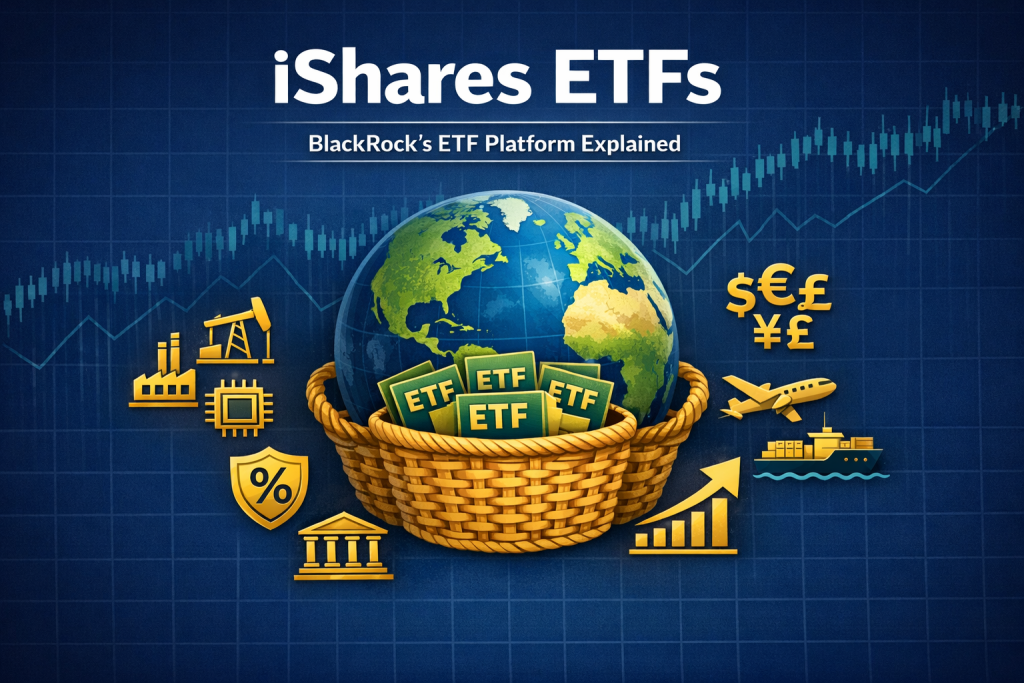
Exchange-traded funds have become one of the most popular investment vehicles in modern financial markets. Among the many ETF providers available to investors, iShares by BlackRock stands out as one of the largest and most widely used platforms in the industry. The iShares lineup includes hundreds of ETFs covering stock indexes, bond markets, sector strategies, and global investment themes — giving investors the ability to build diversified portfolios using a single provider. For investors who want to understand how ETFs function as part of a disciplined, rules-based portfolio strategy, the ETF Investing Guide covers the mechanics of ETFs and how they integrate into long-term investing frameworks.
What Are iShares ETFs?
iShares ETFs are exchange-traded funds managed by BlackRock, one of the largest asset management firms in the world. The iShares brand was launched in 2000 and has since expanded into one of the most recognized ETF ecosystems in global investing. Each fund is designed to track a specific index, sector, or asset class, providing investors with diversified exposure through a single security that trades on a stock exchange like a share of stock.
Unlike mutual funds, which price once per day after market close, ETFs trade throughout the session. This gives investors flexibility to enter or exit positions at market prices during trading hours. Combined with their typically low costs and transparent holdings, these characteristics have made iShares ETFs a core building block for both individual and institutional portfolios.
Most Popular iShares ETFs
Several iShares funds rank among the most widely held ETFs in the world. Four of the most prominent are:
IVV (iShares Core S&P 500 ETF) tracks the S&P 500 Index and is one of the largest ETFs by assets under management globally. It provides broad exposure to large-cap U.S. equities.
AGG (iShares Core U.S. Aggregate Bond ETF) tracks the U.S. investment-grade bond market, covering government, corporate, and mortgage-backed securities. It is widely used as a fixed-income core holding.
EFA (iShares MSCI EAFE ETF) provides exposure to developed international markets in Europe, Australasia, and the Far East, allowing investors to diversify beyond U.S. equities.
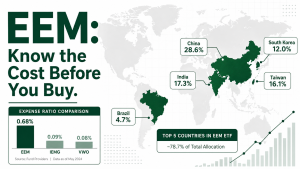
IEMG (iShares Core MSCI Emerging Markets ETF) tracks equities in emerging market economies including China, India, Brazil, and South Korea. It is commonly used to add higher-growth international exposure to a portfolio.
These four funds alone represent a significant share of global ETF assets and illustrate the breadth of what the iShares platform offers — from domestic large-cap equities to international fixed income and emerging markets.
Types of iShares ETFs
One of the defining characteristics of the iShares platform is the variety of ETF categories it covers.
Sector ETFs
Many iShares funds focus on specific industries or economic sectors. Sector ETFs allow investors to gain targeted exposure to areas such as technology, healthcare, energy, or financial services. These funds can help investors adjust portfolio allocations based on economic conditions or market trends, and they are commonly used in sector rotation strategies.
Bond ETFs
iShares offers one of the most comprehensive selections of bond ETFs available. These funds invest in government bonds, corporate bonds, and other fixed-income securities across different maturities and credit quality tiers. Bond ETFs provide income potential while helping diversify portfolios beyond equities.
International ETFs
International iShares ETFs provide exposure to global markets, including developed economies, emerging markets, and specific regions. This geographic diversification allows investors to reduce reliance on any single country’s market performance and access growth opportunities in economies outside the United States.
Costs and Expense Ratios
One of the most significant advantages of iShares ETFs is their low cost structure. The expense ratio represents the annual percentage of fund assets used to cover operating costs including management fees and administrative expenses.
Most iShares Core ETFs charge between 0.03% and 0.20% annually. To put that in concrete terms, IVV charges 0.03% per year — meaning an investor with $10,000 in the fund pays roughly $3 in annual fees. By comparison, a typical actively managed mutual fund might charge 0.75% or more, costing the same investor $75 per year. Over a decade or more, that cost difference compounds significantly and can meaningfully affect total portfolio returns.
Because most iShares funds follow passive index strategies, they require less active management than traditional mutual funds. This structural difference is the primary reason index ETFs consistently carry lower fees than actively managed alternatives.
iShares vs. Vanguard and SPDR
Investors researching iShares frequently compare the platform against its two main competitors: Vanguard and State Street’s SPDR lineup. All three providers offer low-cost index ETFs and compete directly across many of the same categories.
Vanguard is known for its investor-owned structure and has long emphasized cost minimization. Its comparable S&P 500 fund, VOO, carries the same 0.03% expense ratio as IVV. SPDR’s SPY is the oldest U.S.-listed ETF and remains one of the most heavily traded, though its expense ratio of 0.0945% is slightly higher than either IVV or VOO.
The practical differences between these providers are small for most investors. iShares tends to offer the broadest selection of funds across international markets and fixed income, which can be an advantage for investors building globally diversified portfolios. Vanguard’s structure may appeal to investors who prioritize its long-term cost philosophy. SPY’s high trading volume and liquidity make it a preferred choice for institutional and short-term traders. For long-term buy-and-hold investors, the choice between these three providers often comes down to fund selection and personal preference rather than meaningful cost differences.
Using iShares ETFs in a Portfolio
Many investors use iShares ETFs as the foundation of diversified portfolios. Combining multiple ETFs across asset classes — such as a U.S. equity fund like IVV, an international fund like EFA, and a bond fund like AGG — allows investors to build a portfolio with broad market exposure and managed risk in a straightforward way.
Asset allocation is one of the key ways iShares ETFs are used in practice. Investors distribute investments across different asset classes to balance potential returns with acceptable levels of risk. During periods of market volatility, the presence of fixed-income ETFs may help cushion equity-driven fluctuations. iShares offers funds across enough categories that investors can implement asset allocation strategies using a single provider.
For investors applying ETF investing strategies such as passive indexing, sector rotation, or tactical allocation, the iShares lineup provides sufficient breadth to execute those approaches without relying on multiple fund families. At Above the Green Line, ETFs are frequently used within rules-based investment frameworks that combine trend-following signals with disciplined position management — an approach where the transparency and liquidity of iShares funds are practical advantages.
Institutional investors also rely heavily on iShares ETFs. Pension funds, hedge funds, and financial advisors use them to adjust portfolio allocations efficiently, since ETFs can be bought and sold throughout the trading day without the settlement delays associated with individual securities. This flexibility makes them useful tools for managing exposure during changing market conditions.
Risks of iShares ETFs
Like all investments, iShares ETFs carry risks that investors should understand before allocating capital.
Market Risk
ETFs are subject to market risk. If the overall market or sector an ETF tracks declines, the ETF will generally decline with it. Diversification across multiple ETFs reduces company-specific risk but does not eliminate exposure to broad market downturns.
Tracking Error
Tracking error refers to the degree to which an ETF’s performance deviates from the index it is designed to follow. While most large iShares ETFs track their benchmarks closely, some funds — particularly those covering illiquid or niche markets — may experience meaningful divergence. Investors should review an ETF’s historical tracking difference before assuming its returns will closely mirror the index.
Liquidity Risk
Not all ETFs trade with the same volume. Large funds like IVV and AGG have deep liquidity, meaning investors can buy and sell large positions without meaningfully affecting the price. Niche sector ETFs or those covering less-liquid underlying markets may carry wider bid-ask spreads and thinner trading volume, which can increase the cost of entering or exiting positions.
Currency Risk
Investors in international ETFs such as EFA and IEMG are exposed to currency risk. If the U.S. dollar strengthens relative to the currencies of the countries in the fund, returns can be reduced even when the underlying equities perform well. Some iShares international ETFs offer currency-hedged versions that remove this exposure, though those funds typically carry slightly higher costs.
iShares Wrapped Up
iShares by BlackRock offers one of the most comprehensive ETF platforms available to investors, covering U.S. equities, international markets, fixed income, and sector strategies through hundreds of individual funds. Their low cost structure — with core ETFs like IVV charging as little as 0.03% annually — makes them a practical choice for investors focused on minimizing fees over long time horizons. Whether used as standalone core holdings or as components of a more tactical strategy, iShares ETFs provide the transparency, liquidity, and breadth that disciplined portfolio construction requires. For structured guidance on how to integrate ETFs into a rules-based investment strategy, become a member today and join us Above The Green Line.
Because the goal isn’t to own every ETF on the market. It’s to own the right ones, in the right proportions, within a strategy built to last.

Related Articles
Closed End Funds: The Misunderstood Income Vehicle Trading at a Discount (And What That Means for You)
Corporate Bonds: What Every Investor Needs to Know Before Buying One
EEM ETF: What Most Emerging Markets Investors Don’t Know About the Fund They’re Buying
Money Market Funds: The Complete Guide Most Savers and Investors Never Get (But Should)