By ATGL
Updated April 26, 2026
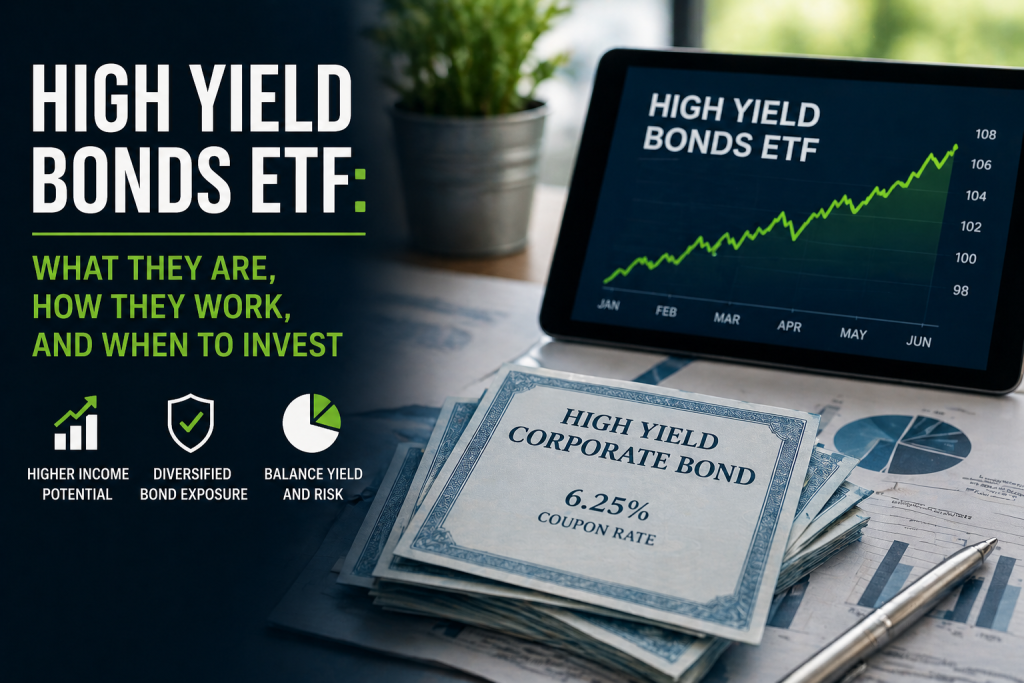
High yield bond ETFs represent a segment of the fixed income market that draws consistent attention from income-focused investors and those seeking to balance yield against credit risk. A high yield bond ETF pools together corporate bonds rated below investment grade, offering substantially higher distributions than government securities or investment-grade corporate debt. For investors seeking to maximize income within a diversified portfolio, these funds provide a liquid, accessible entry point into corporate credit markets.
For a broader understanding of how fixed income funds fit within a diversified portfolio, explore our complete ETF Investing Guide, which covers bond ETFs, equity ETFs, portfolio construction strategies, and how different fund categories align with long-term investment goals.
Defining High Yield Bond ETFs and Targeted Corporate Debt
A high yield bond ETF tracks a basket of corporate bonds issued by companies carrying credit ratings below BBB- from Standard & Poor’s or below Baa3 from Moody’s. These below-investment-grade instruments are commonly referred to as junk bonds — a term reflecting their elevated default risk relative to investment-grade debt. While the label carries a negative connotation, junk bond ETFs are widely utilized by both institutional and individual investors as a legitimate income-generating vehicle.
Companies that issue these bonds typically carry higher debt burdens, operate within more volatile industries, or have limited operating histories and earnings visibility. To attract investor capital under these conditions, issuers compensate with higher coupon rates. This dynamic is the primary driver of elevated corporate bond ETF yield: credit risk commands a meaningful premium over safer fixed income alternatives.
Investment-grade bonds stand in clear contrast. Issued by financially sound corporations and government-backed entities, these instruments carry a lower probability of default but offer correspondingly lower yields. The spread between high yield and investment-grade bond yields at any given time serves as a direct indicator of the credit market’s prevailing risk appetite.
How High Yield Bond ETFs Function in the Open Market
Like all exchange-traded funds, a high yield bond ETF holds a diversified pool of underlying bonds and trades on major exchanges throughout the standard trading session. This structure gives investors simultaneous access to the income characteristics of bond ownership and the intraday liquidity of equities — a combination not easily achievable through direct bond market participation.
Understanding how bond ETFs work is foundational before committing capital to these instruments. Each fund holds anywhere from dozens to several hundred individual corporate bonds distributed across multiple issuers and industries, reducing the impact of any single issuer defaulting on obligations.
A structural difference between bond ETFs and individual bonds is the absence of a fixed maturity date. Because the fund continuously reinvests in new bonds as existing holdings mature or are called, investors receive ongoing income without a defined expiration. This characteristic makes high yield bond ETFs well-suited to portfolios requiring persistent cash flow rather than a lump-sum return of principal at maturity.
Bond ETFs pay dividends. Distributions are typically paid monthly and reflect the net interest income collected from the underlying portfolio after deducting the fund’s expense ratio. The frequency and magnitude vary across funds, making a review of distribution history a necessary step before investing.
Critical Risks Associated With High Yield Investing
Are high-yield bond ETFs worth it? The answer depends on the investor’s risk tolerance and portfolio objectives. These funds carry material risks that warrant careful analysis before any allocation decision is made.
Credit risk is the dominant concern. Because the underlying bonds are issued by companies with weaker financial profiles, the probability of default is considerably higher than in investment-grade portfolios. During economic contraction, default rates among below-investment-grade issuers can increase sharply, compressing fund values and reducing income distributions.
Interest rate sensitivity is measured by duration — the weighted average time to receive a bond’s cash flows, expressed in years. A bond with a longer duration experiences a greater price decline for each percentage point increase in interest rates. The relationship between bond yield and interest rate movements directly affects total return outcomes, particularly during rate-tightening cycles. High yield bonds generally carry shorter durations than investment-grade bonds, providing some buffer against rate increases.
Liquidity risk also warrants attention. During periods of market stress, bid-ask spreads on the underlying bonds can widen significantly, causing the ETF’s market price to deviate from its net asset value. Investors should anticipate short-term price volatility that may not accurately reflect the underlying credit fundamentals of the portfolio.
Strategic Portfolio Allocation and Ideal Market Conditions
High yield bond ETFs tend to generate their strongest results during periods of sustained economic expansion. When corporate earnings are rising and default rates remain low, these instruments can deliver compelling total returns through a combination of regular income distributions and price appreciation as credit spreads compress.
Reviewing bond ETF versus stock ETF performance across different market cycles informs appropriate allocation sizing between the two asset classes. High yield bond ETFs occupy an intermediate position in the risk-return spectrum (exhibiting less volatility than equity funds but more than investment-grade fixed income), making them a logical bridge in diversified portfolios.
Within a balanced income strategy, these funds can supplement traditional fixed income holdings by raising the aggregate portfolio yield without taking on the full price volatility of equity exposure. A common approach places a defined portion of the fixed income allocation in high yield instruments while maintaining the majority in investment-grade bonds or Treasury securities, calibrated to the investor’s specific income requirements and risk parameters.
Investors should consider reducing exposure during late-cycle economic conditions or when credit spreads begin widening materially. Spread widening signals that the market is demanding higher compensation for credit risk — frequently a leading indicator of deteriorating credit conditions and subsequent price pressure on below-investment-grade debt.
Evaluating Key Metrics Before Selecting a Fund
Selecting from the top high yield bond ETFs requires a systematic review of quantitative metrics.
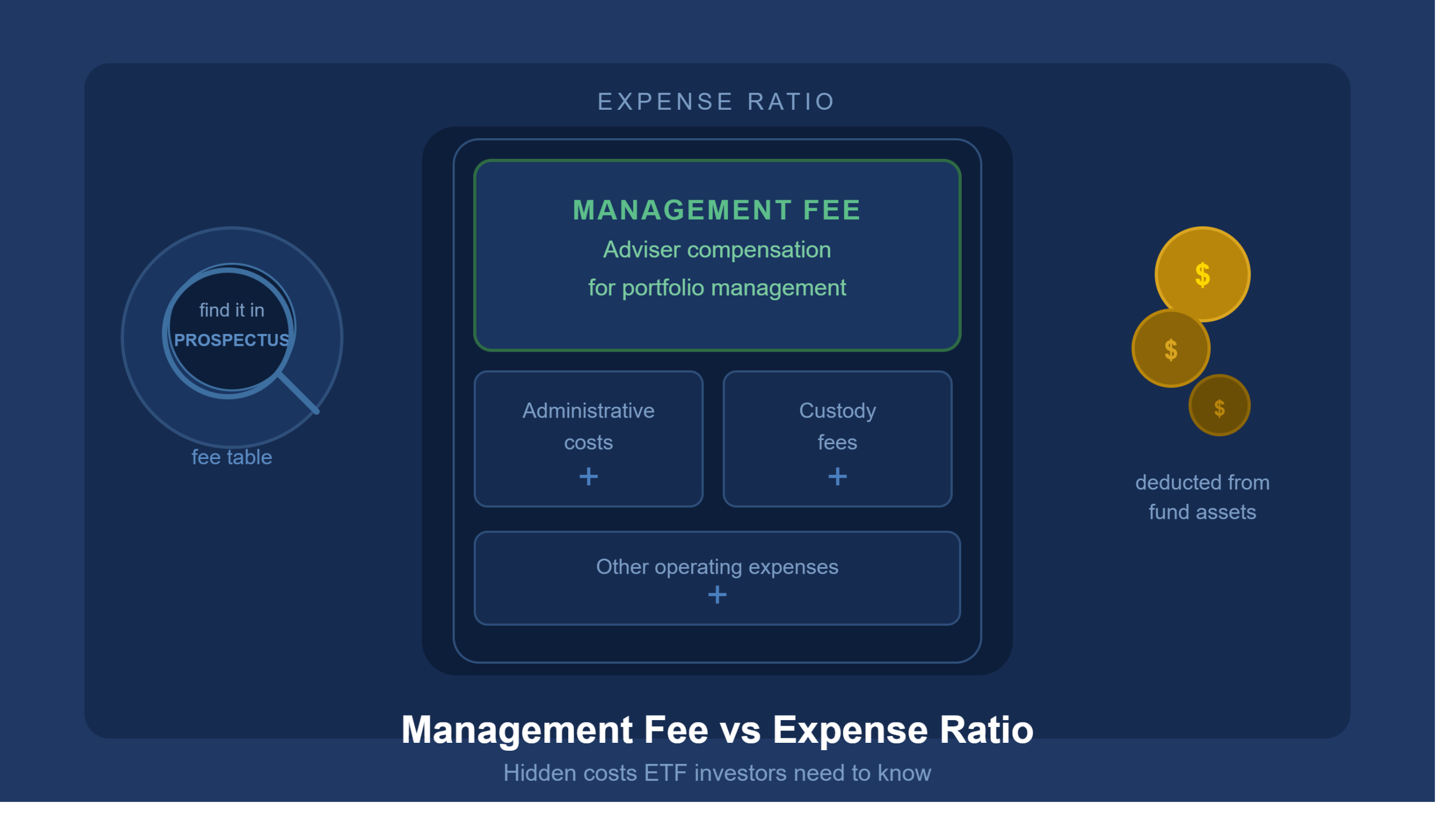
Expense ratio: The annual fee expressed as a percentage of assets under management. A lower expense ratio preserves more of the fund’s gross yield. A difference of 0.20% may appear negligible but compounds significantly over a multi-year holding period.
30-day SEC yield: A standardized measure reflecting the annualized net income generated over the most recent 30-day period. This is the most reliable metric for comparing ETF bonds with the highest yield across competing funds on a consistent basis.
Credit quality distribution: The breakdown of holdings across rating tiers — BB, B, CCC, and below. Funds with heavier allocations to CCC-rated bonds carry significantly greater default exposure. Reviewing this breakdown is essential to accurately calibrating assumed risk.
Historical default rates: Examining the default rates of the underlying index across past credit cycles, along with recovery rates on defaulted bonds, provides context for downside scenarios.
Duration: Aligning a fund’s duration with the current interest rate environment is a sound risk management practice. Shorter-duration funds offer reduced price sensitivity to rate increases, though they may carry lower yields as a trade-off.
Applying these metrics systematically produces more disciplined outcomes and reduces underperformance risk during periods of credit stress.
Navigating Common Questions for High Yield Bond Investors
What is the best high yield bond ETF? There is no universal answer. Suitability depends on the investor’s income requirements, risk tolerance, tax situation, and investment horizon. Among the most widely followed options are funds tracking major indices such as the ICE BofA US High Yield Index and the Bloomberg US Corporate High Yield Bond Index. Prominence of an index, however, does not automatically translate to suitability for a given portfolio.
The best high yield bond ETF for a retiree prioritizing monthly income may differ substantially from the optimal selection for an active investor seeking to capitalize on credit spread movements across economic cycles. A qualified financial advisor can assist in identifying which fund’s credit quality profile, expense structure, and liquidity characteristics best align with the investor’s objectives.
For those evaluating whether these instruments belong in their portfolios, the central question is whether the incremental yield sufficiently compensates for the incremental risk. That calculation shifts with economic conditions, interest rate trajectories, and credit market sentiment. When selected with rigor, allocated appropriately, and monitored consistently, high yield bond ETFs represent a valuable component of a well-constructed income-oriented portfolio.
To explore how high yield bond ETFs and other fixed income strategies can be integrated into your investment approach, contact Above the Green Line for a consultation.

Related Articles
[pt_view id=”fb2451fm3r”]