
Fixed Income ETFs Explained: Types, Risks, and the Best Funds for 2026
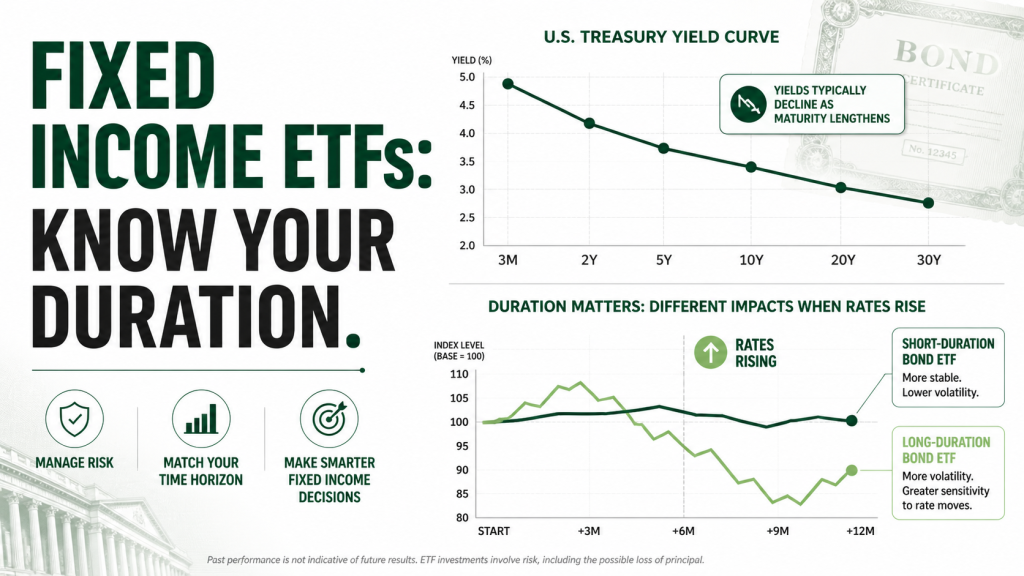
Fixed income ETFs are the most misused category in retail investing. Investors who understand them use these funds to generate steady income, reduce portfolio volatility, and strategically position for interest rate cycles. Investors who don’t understand them buy the wrong duration at the wrong time — and wonder why their ‘safe’ bond fund fell 20% […]
Leveraged ETFs and Trend Strength: When 2x and 3x Funds Work Best
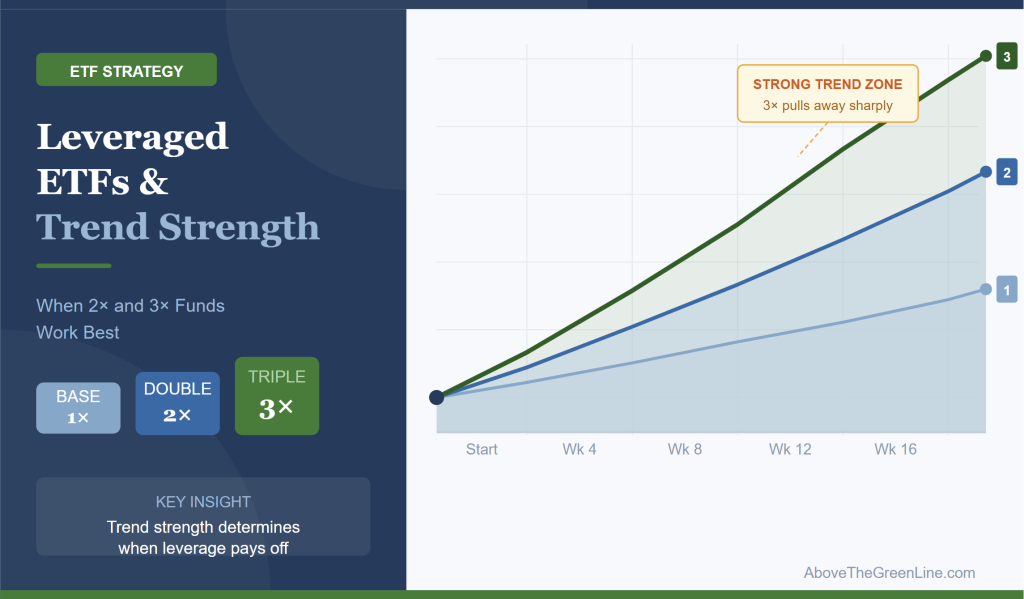
Leveraged exchange-traded funds attract investors and active traders with a compelling promise: amplified returns derived from standard market indices or assets. Understanding how leveraged ETFs work reveals that these instruments are not simply enhanced versions of conventional ETFs — they are precision tools designed for specific market conditions. A 2x leveraged ETF targets double the […]
Dividend Index Funds vs. Growth Index Funds: When Relative Strength Signals a Shift
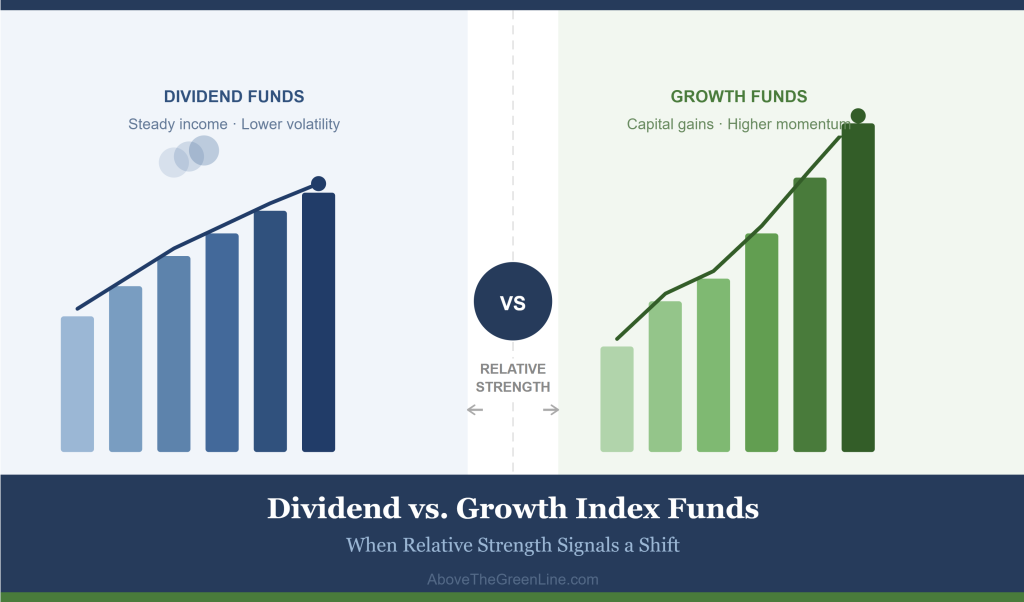
Investors managing long-term portfolios, the decision between index funds that pay dividends and growth-oriented index funds is rarely straightforward. Both categories carry distinct risk and return profiles, and performance leadership shifts depending on macroeconomic conditions. Rather than selecting one fund category and holding it indefinitely, a systematic, signal-driven approach to rotation — anchored in relative […]
EWH vs EWT Compared: Hong Kong vs Taiwan ETF in 2026
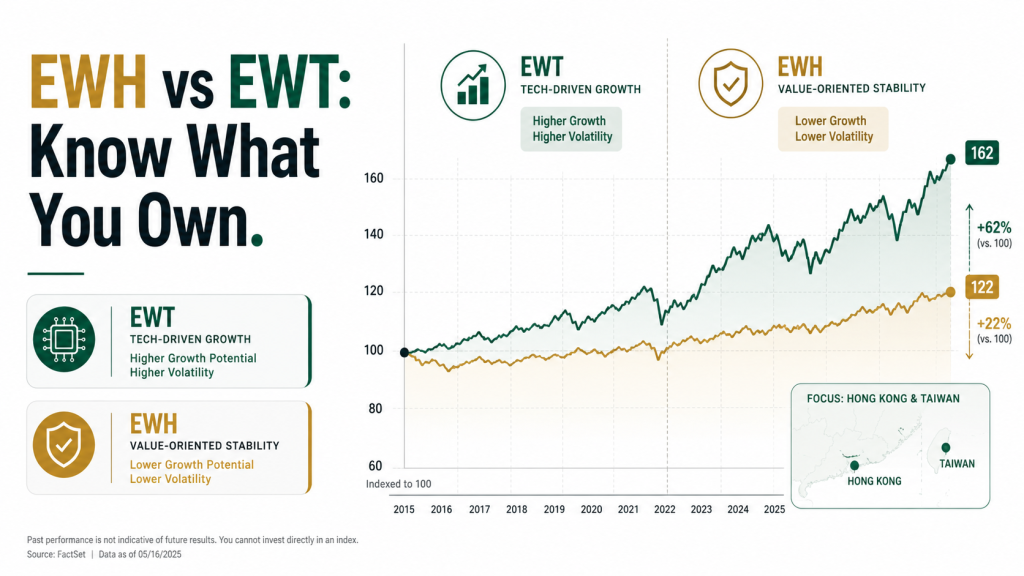
Hong Kong and Taiwan represent two of Asia’s most distinct investment propositions. One offers cheap valuations, dominant financial and property companies, and a currency pegged to the U.S. dollar — but carries the shadow of Beijing’s political reach. The other is the world’s semiconductor backbone, home to TSMC, priced for growth — but one geopolitical […]
High Yield Bonds ETF: What They Are, How They Work, and When to Invest
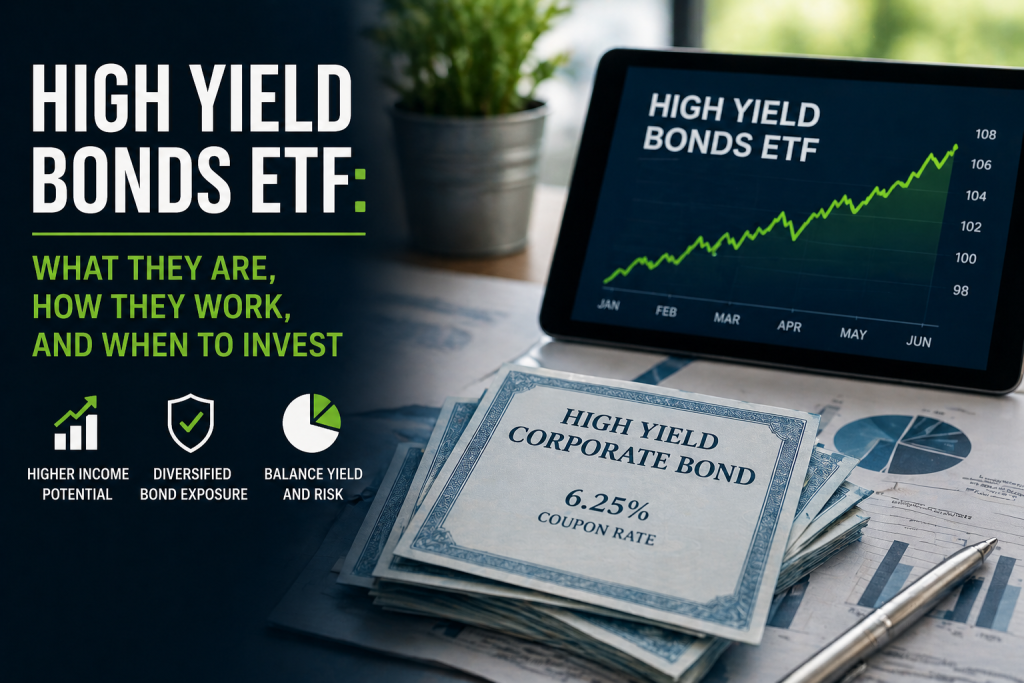
High yield bond ETFs represent a segment of the fixed income market that draws consistent attention from income-focused investors and those seeking to balance yield against credit risk. A high yield bond ETF pools together corporate bonds rated below investment grade, offering substantially higher distributions than government securities or investment-grade corporate debt. For investors seeking […]
Automatic ETF Investing: How to Build Wealth With a Set-and-Forget Strategy
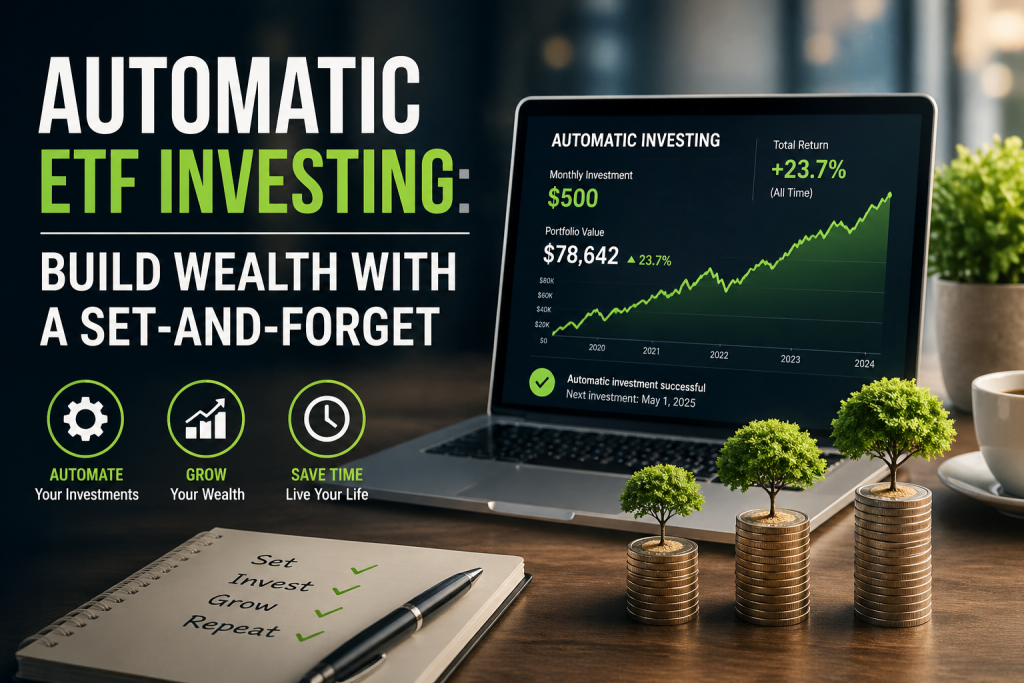
Automatic ETF investing has become one of the most disciplined methods for building long-term wealth, offering a systematic path to portfolio growth without the constant demands of active management. By scheduling recurring contributions into exchange-traded funds, investors at every experience level can maintain consistent market exposure, reduce behavioral biases, and capture the compounding effect over […]
Low Cost Index Funds: The Fee Trap That’s Quietly Draining Your Portfolio (And the Exact Funds to Fix It)
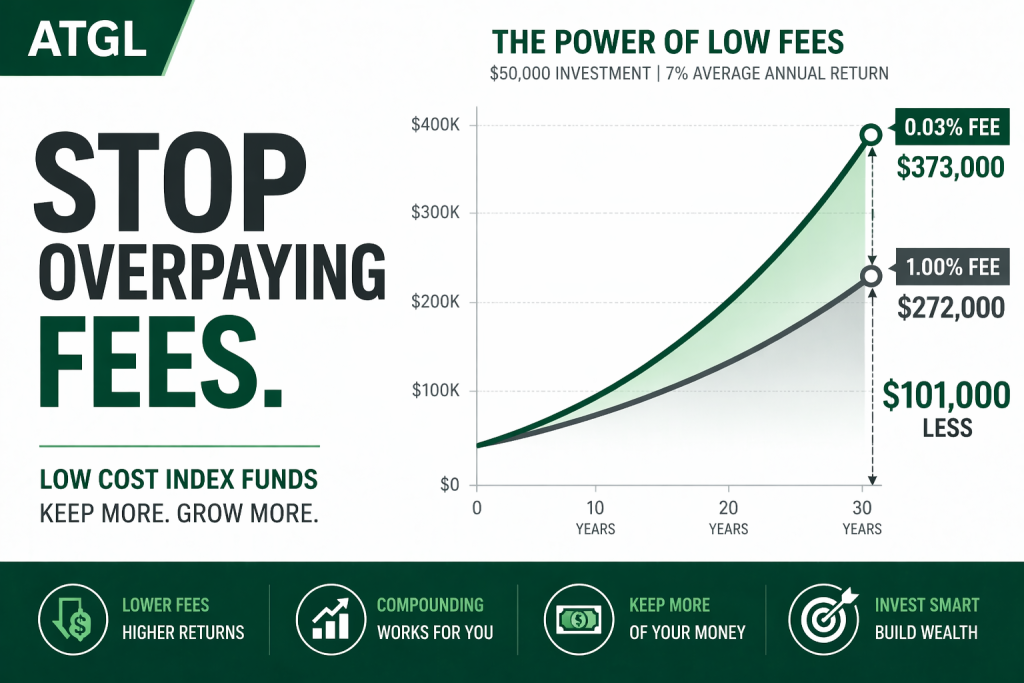
The difference between a 0.03% index fund and a 1.00% actively managed fund on a $50,000 investment over 30 years is not a rounding error. It’s roughly $100,000 in lost compounding. And most investors are paying it without realising it. Low cost index funds are the single most powerful tool in any long-term investor’s arsenal […]
GDX ETF: Why Most Gold Traders Get This Wrong (And How to Use It Right)
Gold is making headlines again. And if you’ve been searching for the best way to profit, you’ve almost certainly come across GDX. But before you buy, there’s something most articles won’t tell you: GDX is not a gold trade. It’s a gold miners trade — and that distinction can cost you significantly if you don’t […]
QQQ Dividend: Does the Nasdaq-100 ETF Pay Dividends?
The Invesco QQQ ETF is one of the most widely traded exchange-traded funds in the world. It tracks the Nasdaq-100 Index, which includes many of the largest technology and growth companies in the United States. Because these companies are often associated with rapid growth and innovation, many investors assume that QQQ focuses entirely on capital […]
iShares ETFs Explained: What They Are and How Investors Use Them
Exchange-traded funds have become one of the most popular investment vehicles in modern financial markets. Among the many ETF providers available to investors, iShares by BlackRock stands out as one of the largest and most widely used platforms in the industry. The iShares lineup includes hundreds of ETFs covering stock indexes, bond markets, sector strategies, […]