By ATGL
Updated December 24, 2025
Key Stock Trading Fees To Know
Stock trading fees fall into two primary categories: explicit costs that appear as line items on account statements and implicit costs that reduce returns without generating visible charges. Each category contains multiple fee types that affect net returns differently depending on trading frequency, position size, and investment strategy.
Explicit Costs
Direct fees represent the most transparent trading expenses. Investment commissions once dominated explicit costs, with traditional brokers charging $5 to $10 per trade through the early 2000s. Full-service brokers historically charged significantly more, often $50 to $100 per transaction, in exchange for research access and advisory services. While many online platforms now advertise zero-commission trading, other explicit charges remain.
Account maintenance fees range from $50 to $200 annually for dormant accounts or those below minimum balance thresholds. Platform fees for advanced trading tools, real-time data feeds, and premium research can add $50 to $300 monthly. Regulatory transaction fees, though modest at approximately $0.0008 per dollar of sales proceeds, accumulate across numerous transactions. Options contracts typically incur per-contract fees of $0.50 to $0.65, while mutual fund transaction fees can reach $20 to $75 per trade, depending on the stockbroker and fund family.
Full-service brokers continue to charge substantially higher fees than discount platforms, with advisory fees typically structured at 1% to 2% of assets under management annually. These percentage-based charges compound the impact on returns, particularly for smaller portfolios where fixed-dollar fees might prove more economical.
Implicit Costs
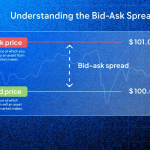
Indirect expenses can add up to more than explicit fees. The bid-ask spread is an unavoidable cost on every trade and gets larger for less liquid stocks, sometimes as much as 1% to 3%. This means you pay more when buying and get less when selling.
Large trades can move prices against you — buying pushes prices up, selling pushes them down. This mostly affects active traders or institutions handling large orders.
Slippage refers to the difference between expected transaction prices and actual execution prices, particularly relevant for market orders during volatile conditions. During rapid price movements, orders may execute at prices significantly different from those displayed when the order was placed. This phenomenon intensifies during market gaps, earnings announcements, or periods of thin liquidity.
Fund-related expenses impose ongoing costs separate from trading fees. The expense ratio — representing annual fund operating costs as a percentage of assets — ranges from 0.03% for low-cost index funds to 2% or more for actively managed strategies. These fees compound annually, creating a substantial long-term performance drag.
Overnight financing fees apply when traders hold leveraged positions past market close. Brokers typically charge interest rates of 5% to 10% annually on margin balances, with rates varying based on account size and prevailing interest rates. For active traders maintaining leveraged positions, these financing costs can exceed explicit transaction fees.
How Fees Affect Your Real Returns
Stock trading fees can significantly reduce your long-term returns. For example, an 8% annual return drops to 6% after 2% in fees. Over 20 years, a $100,000 investment grows to $466,096 without fees but only $320,714 after fees — a $145,382 loss, or 31% less.
Frequent trading increases costs. Making 50 trades a year in a $100,000 portfolio can cost about $500, or 0.5%. This reduces an 8% return to 7.5%. Adding a 0.5% fund fee brings total costs to 1%, cutting returns to 7%.
Active traders pay even more. Making 200 trades a year can cost 2%, dropping an 8% return to 6%. Over decades, these small differences result in large wealth gaps.
Frequent trading is also taxed at higher short-term rates (up to 37%), while holding for over a year qualifies for lower long-term rates. This adds to the cost of active trading.
Comparing Brokers and Share Trading Fees
Trading fees vary by broker. Discount brokers usually charge zero commissions but make money through other methods, such as payment for order flow and premium services. These are best for investors who want low costs and do their own research.
Full-service brokers charge higher fees (1% to 2% per year) but offer advice, research, and planning. Their services may be worth it if they help you earn more than their costs.
Online platforms are in between, offering tools and education at competitive prices. Some charge for advanced features or data, which benefits frequent traders but can be costly for infrequent investors.
When choosing a broker, look at the full fee schedule, not just commissions. Watch for inactivity, transfer, and fund fees. Reviewing all costs helps avoid surprises and enables an accurate comparison of brokers.
Strategies To Minimize Stock Trading Fees
To reduce trading costs:
- Pick a broker that matches your trading style. If you trade fewer than 10 times a year, look for zero commissions and no inactivity fees. If you trade often, compare all fees, not just commissions.
- Use commission-free ETFs to get diversification without transaction costs. Many also have low expense ratios (often under 0.20%), which can work well for core holdings.
- Place limit orders, and avoid trading right at the market open and close. Trading higher-volume stocks can also help keep spreads and market impact lower.
- Combine accounts where it makes sense to avoid duplicate fees and simplify management.
- For less liquid stocks, keep trade sizes under 10% of average daily volume to improve your chances of getting better prices.
Maximize Investment Efficiency by Managing Fees
Stock trading costs represent a controllable drag on portfolio performance that compounds significantly over time. While commission-free trading has reduced explicit expenses, implicit costs, including spreads, slippage, and expense ratios, continue to extract value from investor returns. Understanding the complete cost structure, selecting appropriate brokerage platforms, and implementing deliberate execution strategies creates meaningful performance improvements across investment time horizons.
Investors seeking systematic approaches to portfolio management that account for cost efficiency can explore Above the Green Line’s membership options, which provide strategies designed to optimize returns while managing transaction expenses through disciplined position sizing and strategic timing.

Related Articles
Margin Call Explained: What Triggers It and How to Avoid One
AMC Short Squeeze Explained: Timeline, Causes, and Trading Risks
Volatility Clustering in Financial Markets: Understand Why It Happens
Chaikin Money Flow (CMF): How to Use Volume to Spot Real Market Strength