
By ATGL
Updated December 25, 2025
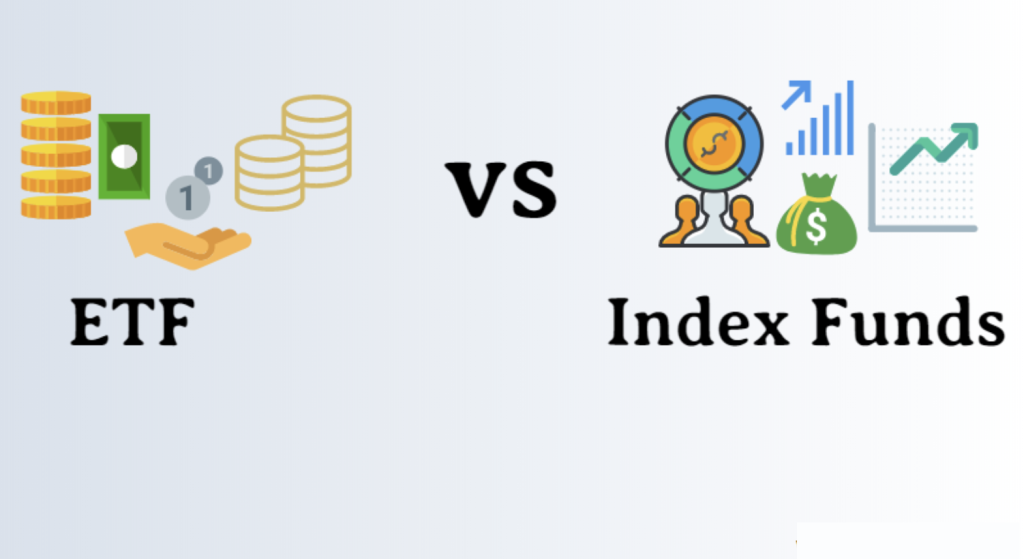
When evaluating an ETF versus an index fund, investors encounter two low-cost, diversified investment vehicles that track market indices. Exchange-traded funds versus index funds represent distinct structures for accessing broad market exposure, yet they differ in trading mechanics, tax treatment, and operational flexibility. Understanding their structural differences helps investors align choices with financial goals, account types, and trading preferences. This comparison examines structure, costs, tax implications, performance characteristics, investor suitability, and technical monitoring approaches.
How ETFs and Index Funds Differ in Structure
Exchange-traded funds trade throughout market hours on stock exchanges, allowing investors to buy and sell shares at fluctuating prices. Index funds price once daily at net asset value after market close. This structural distinction creates fundamental differences in liquidity, pricing flexibility, and execution control.
Intraday trading enables ETF investors to respond immediately to market movements or tactical opportunities. Investors can place limit orders, stop-loss orders, and execute trades at specific price points. Index funds execute all transactions at the day’s closing NAV regardless of when orders were placed.
The S&P 500 represents an index — a benchmark of 500 large-cap U.S. stocks. Investors access this index through S&P 500 ETFs or index funds. Multiple ETF strategies track this benchmark with identical or similar holdings but different trading mechanisms.
ETFs employ a creation and redemption process involving authorized participants who exchange baskets of underlying securities for ETF shares. This mechanism maintains price alignment with NAV and generates tax advantages. Index funds handle transactions directly with the fund company, processing purchases and redemptions through cash exchanges that can trigger taxable events for all shareholders.
Costs, Taxes, and Trading Mechanics
Expense ratios for both products remain comparably low when tracking identical indices. Large S&P 500 ETFs and index funds often charge between 0.03% and 0.09% annually. However, additional costs distinguish these products.
ETF investors pay bid-ask spreads — the difference between buying and selling prices — plus brokerage commissions where applicable. Frequently traded ETFs maintain narrow spreads, whereas less-liquid products carry wider spreads that erode returns. Index funds eliminate trading costs for direct transactions, though some impose redemption fees for short holding periods.
Tax efficiency represents a critical differentiator. ETFs generate fewer taxable capital gains distributions due to their creation-redemption structure. When investors sell ETF shares, they transact with other market participants rather than the fund itself. This allows fund managers to offload appreciated shares through redemptions, minimizing embedded capital gains. Index funds must sell holdings to meet redemption requests, potentially triggering capital gains distributions that affect all shareholders.
For investors holding positions in taxable accounts, this tax treatment significantly impacts after-tax returns. Retirement account investors experience minimal differences since these accounts defer taxes regardless of distribution frequency. Like ETF funds versus mutual funds, this tax consideration weighs heavily in product selection.
How ETFs and Index Funds Perform in Different Market Conditions
Both products deliver similar performance when tracking identical indices, but operational differences can affect results during volatile periods. Tracking error — the deviation between a fund’s returns and its benchmark — occurs in both structures but stems from different sources.
ETFs may trade at premiums or discounts to NAV during extreme volatility. When market stress disrupts creation-redemption activity, ETF prices can temporarily disconnect from underlying holdings. The 2020 market disruption illustrated this, with some bond ETFs trading at substantial discounts despite minimal changes in bond values. These dislocations typically resolve quickly.
Index funds avoid intraday pricing discrepancies since they transact only at NAV. However, they face challenges processing large redemptions during downturns. Fund managers may need to sell holdings at disadvantageous prices or maintain higher cash allocations.
Both products maintain similar long-term tracking quality. Established investment funds demonstrate consistent tracking across market cycles, with differences measured in basis points.
Choosing Between ETFs and Index Funds Based on Investor Needs
Several factors guide product selection based on individual circumstances.
Trading flexibility favors ETFs for investors who value intraday execution or tactical positioning. Traders employing short-term strategies benefit from immediate execution. Index funds suit investors prioritizing simplicity and automation.
Minimum investment requirements differ substantially. Many index funds require an initial investment of $1,000 to $3,000, though some have eliminated minimums. ETFs allow single-share purchases, lowering entry barriers.
Automation preferences influence choice. Index funds facilitate automatic investment plans and dividend reinvestment without trading costs. Investors building positions through regular contributions often prefer index funds. Automation is usually easier with mutual funds, though many brokers now offer recurring ETF purchases and fractional shares.
Tax considerations strongly favor ETFs in taxable accounts due to superior capital gains management. Investors in higher tax brackets benefit meaningfully from reduced distribution frequency. Tax-deferred retirement accounts minimize this advantage.
Neither an ETF nor an index fund universally outperforms the other. Selection depends on account type and investment approach. Investors valuing flexibility and tax efficiency gravitate toward ETFs. Those prioritizing automated investing prefer index funds. Both deliver comparable returns when tracking identical benchmarks.
Using Technical Tools to Monitor ETFs and Index Funds
Regardless of product selection, investors employ technical analysis to monitor positions and identify optimal entry and exit points. Moving averages help identify trend direction and potential reversal points in both ETFs and index funds. The 50-day and 200-day moving averages are widely recognized indicators of intermediate- and long-term trends.
Price crossing above its 50-day moving average often signals strengthening momentum, while crossing below suggests weakening trends. The relationship between shorter and longer moving averages provides additional confirmation. When the 50-day crosses above the 200-day — termed a golden cross — it indicates bullish momentum. Conversely, the death cross occurs when the 50-day falls below the 200-day.
Relative strength analysis compares individual fund performance against broader market benchmarks or sector peers. This comparison helps identify outperforming or underperforming positions that may require rebalancing. Volume analysis, while more applicable to ETFs due to intraday trading data, reveals buying and selling pressure.
Technical analysis for ETFs applies similarly to index funds with daily pricing data, though reduced frequency limits some indicators’ effectiveness. Investors can adapt technical approaches to daily NAV changes, focusing on trend identification and momentum assessment.
Above the Green Line offers systematic approaches to monitoring and managing ETF positions through technical indicators and sector rotation strategies. Whether selecting ETFs or index funds, investors benefit from structured methodologies that remove emotional decision-making. Explore membership options to access tools designed for disciplined, technically-informed portfolio management.

Related Articles
QQQ Dividend: Does the Nasdaq-100 ETF Pay Dividends?
iShares ETFs Explained: What They Are and How Investors Use Them
Consumer Staples ETF: Top Funds, Holdings, and When to Actually Use Them
Index Funds vs Mutual Funds: Key Differences, Costs, and Which Is Better


[…] you’re still learning the mechanics of ETFs, understanding the difference between an etf vs index fund can help clarify how these investment vehicles operate and why ETFs have become so widely used. XBI […]