By Andrew Stowers
Updated March 11, 2026
Investors often focus their portfolios on stocks and bonds, but there is another major asset class that can play an important role in diversification: commodities. Commodities include raw materials such as oil, metals, and agricultural products that are essential to the global economy. Because their prices are influenced by supply, demand, and geopolitical conditions, commodities often behave differently than traditional financial assets. For a broader overview of how exchange-traded funds fit into diversified portfolios, see our complete ETF Strategy Guide.
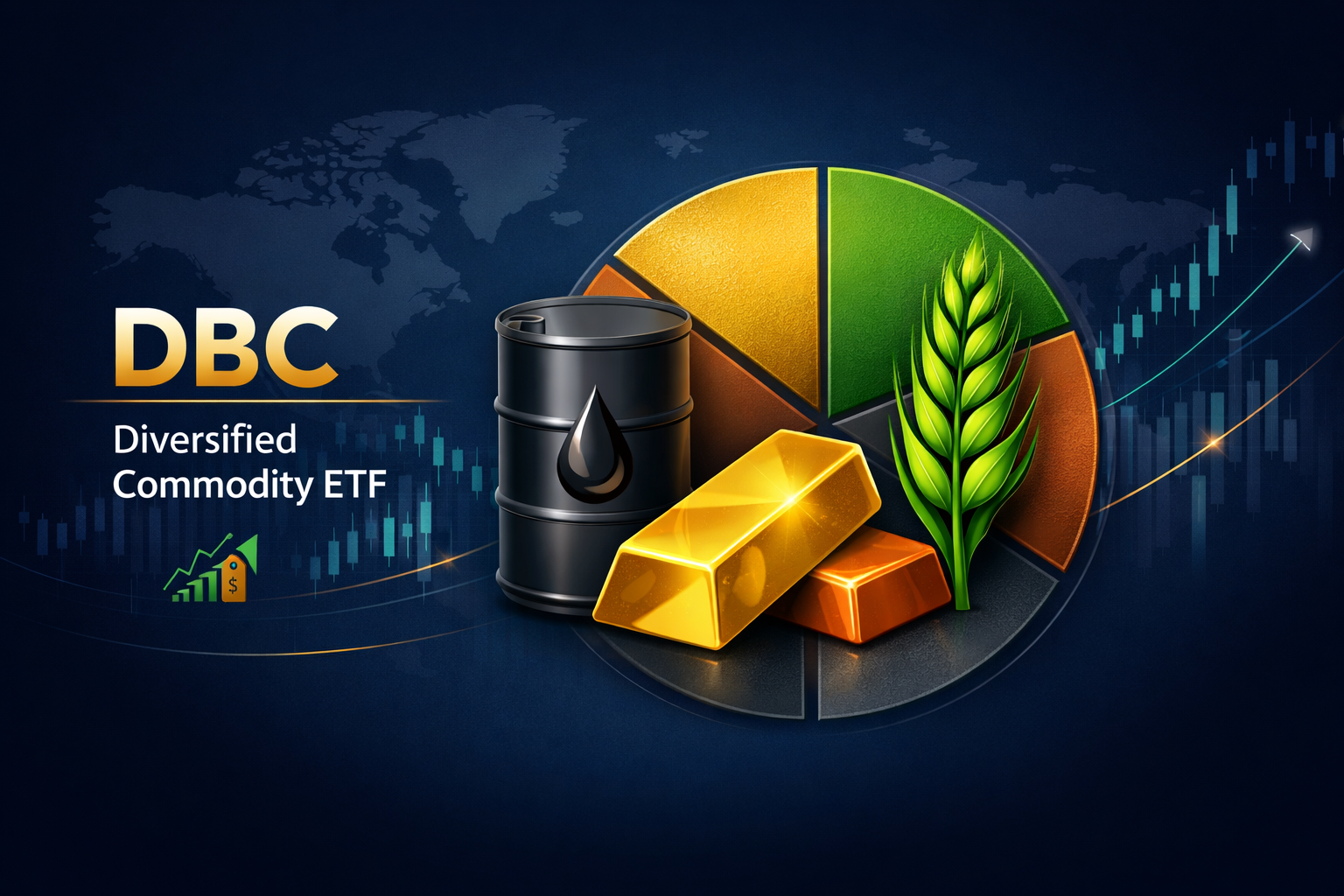
One way investors gain exposure to commodities is through exchange-traded funds. These funds allow investors to track commodity markets without directly trading futures contracts themselves. Among the most widely used commodity ETFs is the DBC ETF, formally known as the Invesco DB Commodity Index Tracking Fund.
Understanding how the DBC ETF works can help investors determine whether commodity exposure fits within their broader investment strategy.
What Is the DBC ETF?
The DBC ETF is designed to track the performance of the DBIQ Optimum Yield Diversified Commodity Index, an index that represents a basket of major commodities across several sectors. The ETF provides investors with diversified commodity exposure through a single security traded on public stock exchanges.
Fund Overview
The ETF launched in 2006 and has since become one of the largest diversified commodity ETFs available to investors. The fund focuses on commodities that play important roles in the global economy, including energy products, metals, and agricultural goods.
Rather than attempting to track the spot price of a single commodity, the fund spreads its exposure across multiple commodity markets. This diversification helps reduce the impact of price swings in any individual commodity.
ETF Structure
Unlike traditional stock ETFs, the DBC ETF does not hold physical commodities such as barrels of oil or bars of gold. Instead, it gains exposure through commodity futures contracts, which are agreements to buy or sell commodities at predetermined prices on future dates.
Because futures contracts require collateral, the ETF also holds Treasury securities and cash equivalents. These assets help support the futures positions used to track commodity prices.
What Commodities Does the DBC ETF Track?
The DBC ETF provides exposure to several commodity sectors, giving investors a broad view of global commodity markets.
Energy Commodities
Energy commodities represent one of the largest allocations within the fund. These typically include futures contracts tied to crude oil, heating oil, and gasoline. Energy prices are heavily influenced by geopolitical events, global demand, and supply conditions in major oil-producing regions. Because energy markets are often volatile, they can contribute significantly to the ETF’s price movements.
Metals and Agricultural Commodities
In addition to energy, the ETF also tracks metals and agricultural products. Metals may include both precious metals such as gold and industrial metals such as copper. Agricultural commodities typically include crops like corn, wheat, and soybeans.
These commodities are influenced by different factors than energy markets. Agricultural prices often depend on weather conditions and harvest yields, while metals markets may be affected by industrial demand and economic growth.
Holdings, Performance, and Costs
Although the ETF tracks commodity markets, its holdings look different from traditional equity funds.
Top Holdings
The DBC ETF primarily holds futures contracts and collateral assets. The collateral typically consists of Treasury securities, short-term government bonds, and cash equivalents. These assets support the futures positions used to gain commodity exposure.
Because of this structure, the ETF’s holdings list may appear unusual compared with stock ETFs. Investors may see government securities listed alongside commodity futures positions.
Historical Performance
Commodity ETFs tend to move in cycles because commodity markets themselves are cyclical. Periods of strong economic growth often increase demand for energy, metals, and agricultural products, which can drive commodity prices higher. Conversely, economic slowdowns may reduce commodity demand, leading to price declines. As a result, the performance of the DBC ETF may vary significantly depending on global economic conditions.
Commodity markets tend to move in longer cycles than many equity markets. These cycles are often driven by global supply constraints, shifts in industrial demand, and macroeconomic factors such as interest rates and inflation. For example, strong economic growth typically increases demand for energy and industrial metals, which can drive commodity prices higher. During economic slowdowns, however, reduced demand for raw materials can lead to prolonged commodity bear markets.
Because the DBC ETF tracks a basket of commodities, its performance often reflects broader trends in the global economy. When inflation accelerates or commodity shortages emerge, commodity ETFs can experience strong performance. During periods of stable supply and moderate economic growth, commodity prices may remain relatively subdued.
Another factor influencing the ETF’s performance is global monetary policy. When central banks increase liquidity in financial markets or reduce interest rates, investors sometimes shift capital toward real assets such as commodities. This can increase demand for commodity exposure and support higher prices. Conversely, rising interest rates can sometimes reduce speculative activity in commodity markets, which may slow price appreciation.
For this reason, investors often view commodity ETFs as cyclical investments rather than permanent portfolio holdings. Understanding where the global economy sits within the commodity cycle can help investors determine whether exposure to funds like the DBC ETF is likely to benefit their portfolios.
Expense Ratio and Costs
The expense ratio of the DBC ETF is higher than many equity ETFs. This is partly due to the operational complexity of managing futures contracts and maintaining collateral positions. Commodity ETFs also incur costs associated with rolling futures contracts, which can affect long-term performance.
How Futures-Based Commodity ETFs Work
To understand how the DBC ETF behaves, it is important to understand how futures-based commodity funds operate.
Futures Contracts Explained
A futures contract is a standardized agreement to buy or sell a commodity at a predetermined price on a specified future date. Futures markets allow producers, consumers, and financial investors to hedge against price changes or speculate on future commodity prices.
Commodity ETFs use futures contracts to track commodity prices without holding physical assets. This approach allows investors to gain exposure to commodities through a simple ETF structure.
Contango, Backwardation, and Roll Yield
Futures contracts eventually expire, which means commodity ETFs must replace expiring contracts with new ones. This process is called rolling futures contracts. The cost of rolling futures can affect returns depending on market conditions.
In a contango market, longer-dated futures contracts are priced higher than near-term contracts. When ETFs roll futures in this environment, they may incur a negative roll yield that reduces returns. Backwardation is the opposite situation, where near-term contracts are more expensive than longer-dated contracts. In this environment, rolling futures may produce a positive roll yield. The DBC ETF tracks an index designed to optimize this rolling process in order to reduce negative roll yield effects.
The roll yield effect is one of the most important concepts for investors considering futures-based ETFs. Even if the price of a commodity remains stable, the ETF’s performance may change depending on the shape of the futures curve.
In prolonged contango environments, commodity ETFs may gradually lose value relative to the underlying commodity price because each contract rollover involves purchasing a more expensive future contract. Over time, this can create a performance drag that investors may not immediately notice when simply tracking spot commodity prices.
The DBC ETF attempts to mitigate this issue by tracking the DBIQ Optimum Yield Diversified Commodity Index, which selects futures contracts designed to minimize negative roll yield. Instead of always rolling into the nearest contract, the index evaluates multiple contract maturities and chooses the contract with the most favorable expected roll yield.
While this approach cannot eliminate futures-related costs entirely, it helps reduce the long-term drag that contango can create. As a result, the ETF may perform more efficiently than commodity funds that simply track front-month futures contracts. Understanding this structural difference is important for investors evaluating commodity ETFs. Funds that optimize futures exposure may behave differently than those that rely on standard rolling schedules.
Advantages and Risks of the DBC ETF
Commodity ETFs offer several potential advantages but also carry important risks.
Diversification and Inflation Protection
Commodities often behave differently from stocks and bonds. As a result, adding commodities to an etf portfolio can sometimes improve diversification. Commodity prices may also rise during periods of inflation, which can help protect purchasing power.
Volatility and Futures Risks
Despite these benefits, commodity ETFs can be highly volatile. Commodity prices may change quickly in response to geopolitical events, weather disruptions, or shifts in supply and demand. Futures-based ETFs also face additional risks related to roll yield and futures curve dynamics. These factors can cause ETF performance to differ from the spot prices of commodities.
How Investors Use the DBC ETF in a Portfolio
Many investors view commodities as a supplemental asset class rather than a core holding.
Portfolio Allocation Strategies
Commodity ETFs are often used to complement traditional investments such as stocks and bonds. Investors may allocate a small percentage of their portfolios to commodities in order to reduce correlation with equity markets. Commodities can also serve as a hedge during periods of rising inflation or geopolitical instability.
Investors who incorporate commodities into their portfolios often treat them as a tactical allocation rather than a permanent core holding. In many portfolio construction models, commodities represent a relatively small percentage of total assets, typically ranging from 3% to 10% depending on the investor’s objectives.
This allocation approach allows investors to benefit from commodity diversification without allowing commodity volatility to dominate overall portfolio performance. Because commodity prices can fluctuate significantly over short periods, maintaining a balanced allocation can help manage risk.
Another common strategy involves using commodity ETFs as part of a broader asset allocation framework. Investors who hold diversified portfolios of stocks, bonds, and alternative assets sometimes use commodities to reduce correlations between asset classes. When equity markets decline due to inflation concerns or supply shocks, commodity prices may rise, helping offset losses elsewhere in the portfolio.
Some investors also use commodity ETFs tactically during periods of rising inflation expectations. Because commodity prices are often closely tied to inflation dynamics, commodity exposure can help portfolios maintain purchasing power during inflationary cycles. However, investors should also remember that commodity markets can experience long periods of stagnation or decline. For this reason, commodity ETFs are typically used as complementary holdings rather than primary long-term growth investments.
Is the DBC ETF a Good Investment?
Whether the DBC ETF is a good investment depends largely on an investor’s objectives and risk tolerance. Investors researching are commodity etfs a good investment often find that commodities are best used as a diversification tool rather than a primary growth investment. For long-term investors comparing sector etfs and commodity funds, DBC may provide exposure to an asset class that behaves differently from traditional stock sectors.
Bringing It All Together
Here’s the key takeaway.
The DBC ETF offers investors a convenient way to gain diversified exposure to global commodity markets through a single exchange-traded fund. By tracking futures contracts tied to energy, metals, and agricultural commodities, the fund provides access to an asset class that can behave differently from traditional stock investments. For investors seeking diversification or protection against inflation, commodity ETFs like DBC may play a valuable role in a well-balanced portfolio. If you want structured guidance on applying disciplined investment strategies, you can learn more about our membership.
Because successful investing isn’t about chasing every asset class. It’s about making the smartest decisions with the capital you already have.

Related Articles
QQQ Dividend: Does the Nasdaq-100 ETF Pay Dividends?
iShares ETFs Explained: What They Are and How Investors Use Them
Consumer Staples ETF: Top Funds, Holdings, and When to Actually Use Them
Index Funds vs Mutual Funds: Key Differences, Costs, and Which Is Better