By ATGL
Updated December 25, 2025
Volume-based indicators play a critical role in technical analysis because they help traders understand how price is moving—not just where it is moving. While price shows direction, volume provides insight into conviction. One of the most widely used tools for this purpose is the accumulation distribution indicator.
The accumulation distribution (A/D) indicator measures whether buying pressure (accumulation) or selling pressure (distribution) is dominating a security over time. Instead of relying solely on closing prices, it blends price location within a trading range with volume to estimate whether capital is flowing into or out of an asset.
This article explains how the accumulation distribution indicator works, how traders interpret its signals, and how it fits into a disciplined, rules-based trading process. You’ll learn how A/D identifies buying pressure, how to spot divergences, and how to combine it with other tools to improve decision-making.
How The Accumulation And Distribution Indicator Measures Market Pressure
At its core, the accumulation distribution indicator distinguishes between accumulation and distribution. Accumulation occurs when market participants are steadily buying shares, often without driving price sharply higher. Distribution occurs when shares are being sold into strength, even if price has not yet declined.
The A/D indicator measures this pressure by evaluating two inputs together:
- Where price closes within its daily range
- How much volume traded during that session
If price closes near the top of its range on strong volume, the indicator interprets that as accumulation. If price closes near the bottom of the range on strong volume, it signals distribution.
For example, consider a stock that trades between $50 and $55 during the day and closes near $54.80 on above-average volume. Even if price only moves modestly higher, the closing location suggests buyers were in control throughout the session. Over time, repeated sessions like this cause the A/D line to rise, signaling sustained buying pressure.
This framework answers a common question traders ask: How do you know if it’s accumulation or distribution? The answer lies in combining closing position within the range with volume. Rising A/D indicates accumulation; falling A/D indicates distribution—even when price appears flat.
Key Components of the A/D Formula
The accumulation distribution indicator follows a clear calculation process. Understanding the components helps traders interpret its signals with greater confidence.
Money Flow Multiplier
The money flow multiplier measures where the closing price sits within the high-low range of a period. It assigns a value between –1 and +1.
- A close at the high produces a value near +1
- A close at the low produces a value near –1
- A close near the midpoint produces a value near 0
This step determines whether the session favors buyers or sellers.
Money Flow Volume
The money flow volume multiplies the money flow multiplier by total volume for the period. This weighting ensures that high-volume sessions have more influence than low-volume ones.
The money flow volume is then added cumulatively to form the A/D line, which rises during accumulation phases and falls during distribution phases.
This cumulative nature is important. The A/D indicator does not reset daily—it builds a running total that reflects longer-term pressure. When traders ask, what is a good accumulation distribution indicator?, the answer is not a single number or threshold. A “good” signal comes from how consistently the A/D line confirms or contradicts price behavior over time.
Reading Trend Strength and Reversal Signals With A/D
One of the most practical uses of the accumulation distribution indicator is trend confirmation. When price is trending higher and the A/D line is also making higher highs and higher lows, buying pressure supports the trend. This alignment increases confidence that the move is structurally sound.
Conversely, when price continues to rise but the A/D line begins to flatten or decline, traders may be seeing distribution beneath the surface. This divergence suggests that price advances are no longer supported by volume-driven demand.
Divergences are especially useful as early warning signals, not immediate trade triggers. A bearish divergence does not guarantee an imminent reversal, but it alerts traders to tightening conditions and the potential for trend fatigue.
The same logic applies in downtrends. If price continues lower while the A/D line stabilizes or rises, accumulation may be taking place quietly. This can precede trend stabilization or reversal, particularly when combined with broader market context.
To interpret these signals accurately, traders must reference stock charts rather than isolated indicator readings. The relationship between price structure and A/D behavior provides the actionable insight.
Combining Accumulation And Distribution With Other Trading Tools
The accumulation distribution indicator is most effective when paired with complementary tools rather than used in isolation. Its strength lies in confirming or questioning what price-based analysis already suggests.
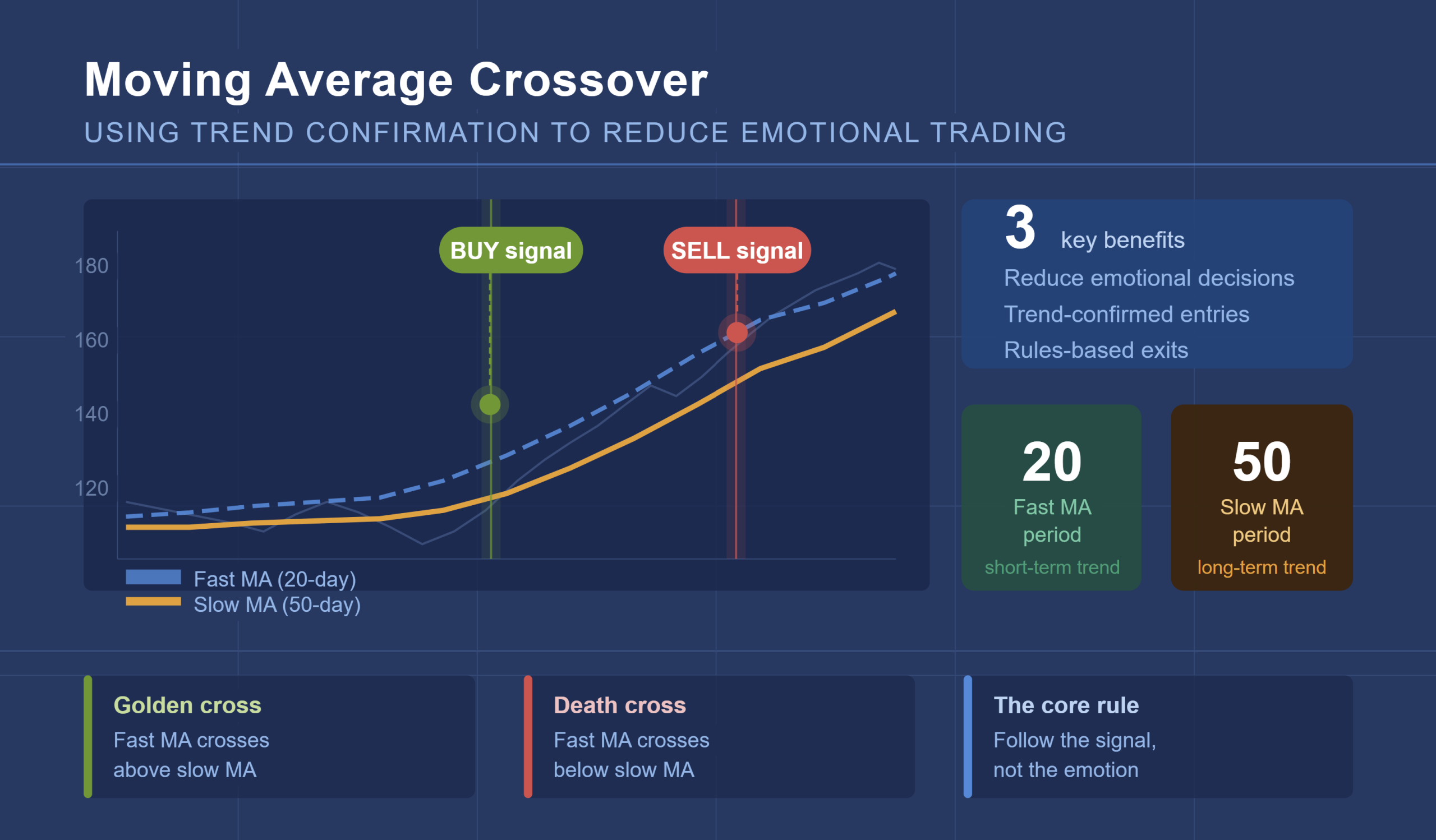
One common pairing is with moving averages. For example, if price breaks above a key moving average and the A/D line is trending higher, buying pressure supports the breakout. If price crosses above the average while A/D lags, traders may treat the move with caution.
A/D also works well alongside chart patterns. When a stock forms a consolidation pattern and the A/D line trends upward during that range, it suggests accumulation is occurring ahead of a potential upside resolution. This context can help traders filter higher-quality breakout candidates.
In systematic approaches, the ADL indicator strategy often involves:
- Trading in the direction of the dominant A/D trend
- Avoiding long positions when A/D is declining
- Using divergences as risk-management or position-sizing inputs
These applications align naturally with broader technical indicators frameworks that emphasize confirmation and probability over prediction.
Common Mistakes When Interpreting Accumulation And Distribution
Despite its usefulness, the accumulation distribution indicator has limitations that traders must respect.
First, the A/D line ignores price gaps. Because it focuses on the closing position within each period’s range, it does not account for overnight gaps or inter-period jumps. This can distort signals in highly volatile markets.
Second, traders often overreact to short-term divergences. Not every divergence leads to a reversal, especially in strong trends. Acting too early can result in missed opportunities or premature exits.
Another common mistake is using A/D without context. The indicator does not define support, resistance, or trend structure on its own. Without reference to price action, signals lose much of their value.
Finally, relying solely on A/D without confirmation from other tools increases false signals. Combining it with price structure, trend analysis, and additional volume metrics produces more reliable outcomes.
Applying Buying Pressure Insights to Smarter Trading Decisions
The accumulation distribution indicator offers traders a structured way to evaluate buying and selling pressure beyond price alone. By analyzing how volume interacts with closing prices, A/D helps uncover whether institutional participation is supporting or undermining visible trends.
When integrated into a disciplined framework—alongside moving averages, chart patterns, and broader technical analysis—the indicator supports more informed, data-backed decisions. It is not a prediction tool, but a confirmation mechanism that improves trade selection and risk awareness.
ATGL Membership provides traders with structured technical analysis tools, volume-based frameworks, and rules-driven systems designed to interpret indicators like accumulation distribution with clarity and consistency.
Used correctly, the accumulation distribution indicator becomes more than a line on a chart—it becomes a practical lens for evaluating market pressure and aligning trades with informed participation rather than speculation.

Related Articles
[pt_view id=”9517038dwu”]