By Andrew Stowers
Updated March 12, 2026
In early 2021, the stock market experienced one of the most unusual trading events in modern financial history. Shares of AMC Entertainment, a struggling movie theater chain, surged dramatically in price as millions of retail investors bought the stock in an effort to trigger a short squeeze. The event captured global attention and became one of the defining moments of the meme stock era. While the AMC short squeeze generated enormous profits for some traders, it also exposed many investors to extreme volatility and significant losses.
Understanding how the AMC short squeeze unfolded—and how short squeezes work more broadly—can help investors better understand one of the most dramatic market phenomena of the past decade.
What Was the AMC Short Squeeze?
The AMC short squeeze refers to the rapid increase in AMC Entertainment’s stock price during 2021, driven largely by retail investors coordinating through online forums.
The Meme Stock Phenomenon
During the COVID-19 pandemic, millions of new retail traders entered the market. Online communities began sharing investment ideas and discussing heavily shorted stocks that hedge funds were betting against. AMC became one of the most widely discussed stocks within these communities. Retail investors began purchasing shares and options in large numbers, hoping to force short sellers to cover their positions.
AMC’s Unique Market Conditions
AMC was particularly vulnerable to a short squeeze because a large portion of its shares had been sold short by hedge funds. Many institutional investors believed the company’s long-term outlook was weak due to declining movie theater attendance and pandemic-related shutdowns. When retail investors began buying the stock aggressively, the price started to rise. This created pressure on short sellers who had bet on the stock declining.
What Is a Short Squeeze?
To understand the AMC event, it is important to first understand what is a stock short squeeze.
How Short Selling Works
Short selling occurs when an investor borrows shares of a stock and sells them with the expectation that the price will decline. If the price falls, the investor can repurchase the shares at a lower price and return them to the lender, keeping the difference as profit. Short selling is a common strategy in stock trading, particularly among hedge funds and institutional investors.
Why Short Squeezes Happen
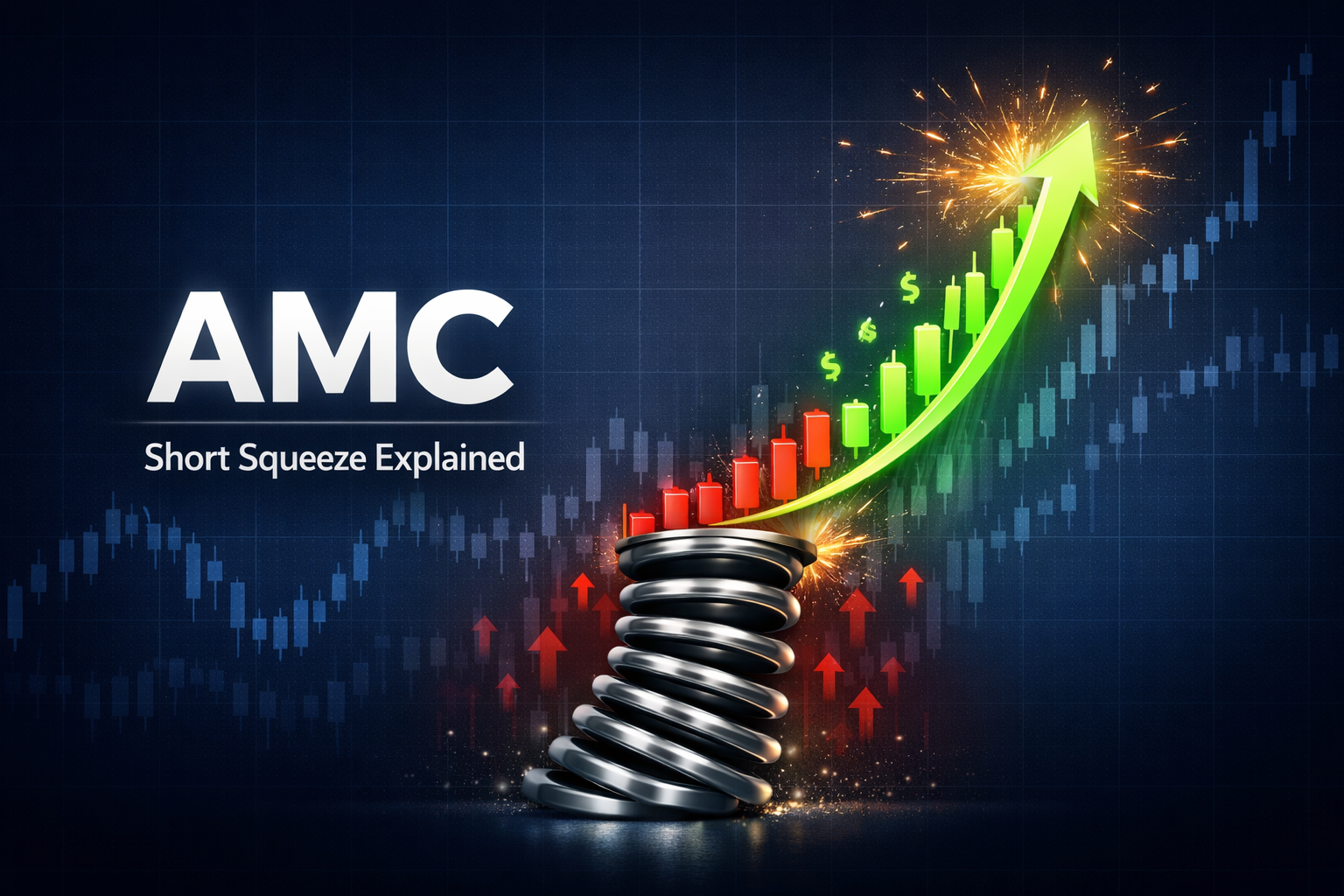
A short squeeze occurs when the price of a heavily shorted stock begins rising instead of falling. As the price increases, short sellers face growing losses. To stop those losses, short sellers may buy back shares to close their positions. This buying activity pushes the stock price even higher, forcing more short sellers to cover their positions. This chain reaction can cause a stock price to rise rapidly in a short period of time.
The Timeline of the AMC Short Squeeze
Early 2021 Retail Trading Surge
In early 2021, online communities began focusing on heavily shorted companies. AMC quickly became one of the most popular targets. Retail traders purchased shares and options in large numbers, increasing buying pressure on the stock.
Price Explosion and Media Coverage
As buying activity increased, AMC’s share price began rising rapidly. The stock surged from just a few dollars per share to over $70 during its peak in June 2021. The event attracted widespread media coverage and sparked debates about the role of social media in financial markets.
Why AMC Became a Target for a Short Squeeze
High Short Interest
At the time of the squeeze, a large percentage of AMC’s publicly traded shares had been sold short. This created the potential for significant short covering if the stock price began rising. High short interest is one of the primary factors that allows short squeeze stocks to occur.
Retail Investor Momentum
Retail investors played a central role in the AMC short squeeze. Many traders were motivated not only by potential profits but also by a desire to challenge hedge funds that had heavily shorted the stock. This social momentum amplified the buying pressure and helped sustain the rally for several months.
The Role of Options Trading in the AMC Squeeze
While retail buying of shares played a major role in the AMC short squeeze, options trading also amplified the move. Many traders purchased call options on AMC shares, betting that the stock price would continue rising. Call options give the holder the right to buy shares at a predetermined price before the option expires. When large numbers of call options are purchased, market makers who sell those options often hedge their positions by buying the underlying stock.
This hedging activity can create additional upward pressure on the stock price. As more call options are purchased, market makers may need to buy more shares to maintain their hedged positions. This dynamic is sometimes referred to as a gamma squeeze, where options trading accelerates the movement of the underlying stock.
During the AMC rally, significant options activity contributed to the stock’s rapid price movements. As retail traders purchased large volumes of call options, market makers were forced to buy shares to hedge their exposure. This additional buying pressure pushed the price higher, which in turn encouraged even more options activity.
The combination of short covering and options hedging created a powerful feedback loop. Short sellers were forced to buy shares to limit losses, while market makers were buying shares to hedge options positions. Together, these forces amplified the price surge and helped drive the dramatic upward movement seen in AMC shares.
Risks of Trading Short Squeeze Stocks
Volatility and Rapid Price Swings
Short squeezes can produce extreme price volatility. Stocks involved in squeezes often experience massive price swings within a single trading session. Investors entering these trades late in the cycle may face significant losses if the price declines quickly.
The Psychology Behind Short Squeeze Trading
Short squeeze events are not driven purely by financial fundamentals. Market psychology plays a significant role in how these events unfold. When traders believe that a short squeeze is possible, the expectation of rising prices can attract even more buyers. This collective behavior can create self-reinforcing market momentum.
In the case of AMC, online communities created a strong sense of shared purpose among retail traders. Many participants believed they were collectively challenging institutional investors who had bet against the company. This narrative helped fuel enthusiasm and encouraged continued buying activity. Social media platforms accelerated the spread of information and speculation. Posts discussing the potential for a squeeze could reach millions of traders almost instantly. This rapid information flow amplified investor sentiment and increased trading activity across brokerage platforms.
However, psychological momentum can reverse just as quickly as it builds. When sentiment shifts and traders begin selling, prices may fall rapidly. Because many participants in short squeeze trades are motivated by momentum rather than long-term investment analysis, sudden price reversals can occur once enthusiasm fades.
Understanding the psychological factors involved in short squeezes can help investors recognize why these events are difficult to predict and even more difficult to sustain.
Liquidity and Market Psychology
Short squeezes are often driven by market psychology rather than fundamental business performance. As a result, prices can disconnect from the underlying value of the company. Investors who participate in these trades should understand that the price movements are often temporary.
Could AMC Short Squeeze Again?
Market Conditions Required
For another AMC short squeeze to occur, several conditions would likely need to align. First, the stock would need to have significant short interest again. Second, there would need to be strong buying momentum from investors. Finally, market sentiment would need to support speculative trading. While short squeezes can occur in many markets, predicting them in advance is extremely difficult.
Lessons Investors Learned From the AMC Short Squeeze
The AMC short squeeze provided several important lessons for investors about modern financial markets. One of the most significant insights was the growing influence of retail investors. Online trading platforms and commission-free brokerage accounts have made it easier than ever for individuals to participate in the stock market.
The event also highlighted how information spreads in the digital age. Investment ideas can now travel quickly through social media platforms and online communities. This rapid communication can amplify both enthusiasm and fear among traders, leading to sudden surges in trading activity.
Another lesson from the AMC short squeeze is the importance of understanding risk. Many investors who entered the trade early experienced substantial gains. However, others who purchased shares near the peak of the rally experienced significant losses when the price later declined.
This pattern is common in speculative trading events. As prices rise rapidly, new investors may enter the market hoping to capture further gains. If the rally reverses, those late participants may face the largest losses.
Finally, the AMC event demonstrated how market structure can influence price movements. Short interest, options activity, and trading momentum can interact in complex ways. When these forces align, they can produce dramatic price movements that are difficult to anticipate using traditional valuation methods.
For investors studying events like the AMC short squeeze, the most important takeaway is the importance of understanding market mechanics. Learning how short selling, options trading, and investor psychology interact can provide valuable insight into how extreme market events develop.
Bringing It All Together
Here’s the key takeaway.
The AMC short squeeze demonstrated how powerful market dynamics can become when heavy short interest collides with large waves of buying pressure. While the event generated enormous attention and profits for some traders, it also highlighted the risks associated with speculation and crowd-driven trading. If you want to learn more about stock trading, feel free to reference our stock trading strategy guide. And if you’re looking for structured guidance on applying disciplined investment strategies and learning how to evaluate investments more systematically, you can explore our membership.
Because successful investing isn’t about chasing viral trades.
It’s about understanding how markets work and making informed decisions over time.

Related Articles

Penny Stocks: How to Identify High-Probability Setups Using Rules-Based Investing
Margin Call Explained: What Triggers It and How to Avoid One
Volatility Clustering in Financial Markets: Understand Why It Happens
Chaikin Money Flow (CMF): How to Use Volume to Spot Real Market Strength