Above the Green Line -01
  • Market Insights
        • Commentary
          • Daily
          • Weekly
        • BUY / SELL SIGNALS
          • Trade Posts
          • Recent Trade Alerts
          • Recent Day Trades
        • BLOGROLL
          • Dividend Growth Blog
          • ETF Sector Blog
          • Dow Dogs
          • TPOW Blog
  • Strategies
        • SWING TRADING
          • Current Positions
          • Watchlists
          • Closed Positions
          • Candidates - TOP 100
          • Specialty Stocks
        • WEEKLY STOCK PICK
          • TPOW Charts
          • TPOW Performance
          • TPOW Strategy Guide
          • TPOW Performance Dashboard
          • Why Weekly Trading Works
        • DAY TRADING
          • Watch List
        • ATGL DASHBOARD
        • ETF STRATEGIES
          • ETF Sector Rotation
          • ETF Sector Portfolio
        • DIVIDEND GROWTH
          • Dividend Growth Portfolio
          • Dividend Calendar
        • DOGS OF THE DOW
          • Dogs of the Dow Portfolio
          • DOW 5 Portfolio
  • Markets
        • US MARKET
          • Commodities
          • Energy
          • Precious Metals
          • Volatility
        • GLOBAL MARKETS
          • Market Indices
          • Economic Calendar
          • FOREX Heat Map
          • FOREX Cross Rates
          • Crypto Currency Market
  • Investing
    • Discord Community
    • Dashboard
  • Resources
        • INVESTING GUIDES
          • Dividend Growth Guide
          • Investment Strategy Framework
          • ETF Investing Handbook
          • Stock Trading Handbook
        • ARTICLES
          • Dividend Growth Model Articles
          • ETF Articles
          • Investment Strategies Articles
          • Market and Economic Insights
          • Stock Trade Articles
          • Stock Reviews
        • TOOLS
          • Stock Scanners
          • Charting Software
          • Brokerage Firms
          • Stocks We Review
        • STOCK CHARTS
          • Key Components
          • Reading Charts
          • Drawing Stock Charts
          • Identifying Trends
  • About
    • Contact Us
    • How to Win
    • #1 At Stockcharts
    • Disclaimer
    • FAQ
  • Log In
  • Subscribe

November 8, 2019

Fundamental Analysis vs. Technical Analysis
Fundamental Analysis vs. Technical Analysis


By Author

Updated February 8, 2024

Table of Contents

Toggle
  • Fundamental Analysis vs. Technical Analysis
      • Fundamental Analysis
      • Technical Analysis
      • Key Differences
      • Which One Is For Me?

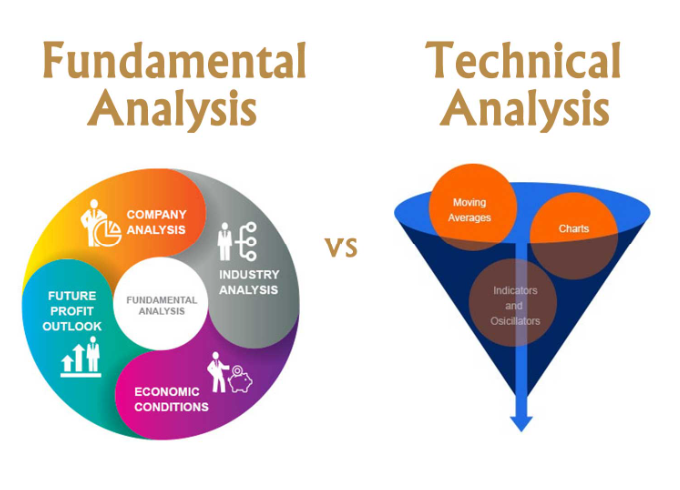
When it comes to investing your money, it is important to have a grasp of the basic schools of thought: fundamental analysis and technical analysis. Both approaches differ greatly from one another, yet both are immensely useful depending on your interests and goals.

Fundamental Analysis

Fundamental analysis is named as such because it thoroughly examines a set of basic economic factors, also known as fundamentals, that impact the stock price of a company in the future. Fundamental factors include financial statements, management processes, industries, competitions, business concepts, etc. There are three phases of analysis: the economy, the industry, and the company.
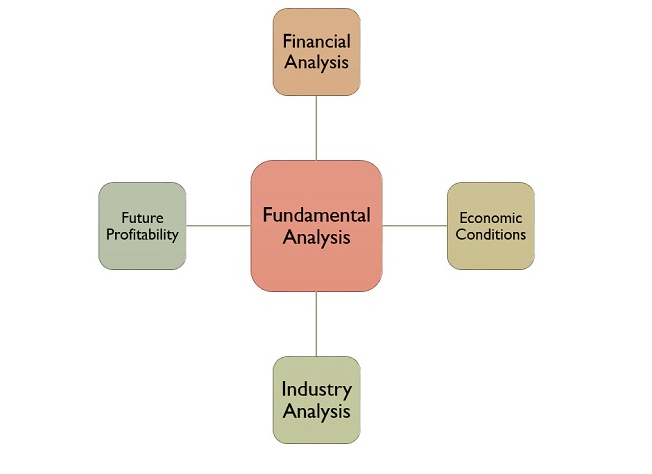
A chart describing the relationship of fundamental analysis to financials, future profitability, economic conditions, and industry
S, Surbhi. “Fundamental Analysis Chart.” Key Differences, 13 Aug. 2019, keydifferences.com/difference-between-fundamental-and-technical-analysis.html

The analysis of the economy examines the general economic condition of the country using economic indicators, the industry is inspected to determine its industry classification in relation to its competitiveness and life cycle, and the company is analyzed to determine whether to buy, hold, or sell based on the financial and non-financial characteristics of the firm. This particular form of analysis is an approach to investment that does not consider short term pricing or trading swings, rather, it is a long term investment strategy. Ultimately, the goal of this form of analysis is to provide the intrinsic value of a stock, gathered by considering both past and present statistics concerning the fundamental factors.

Technical Analysis
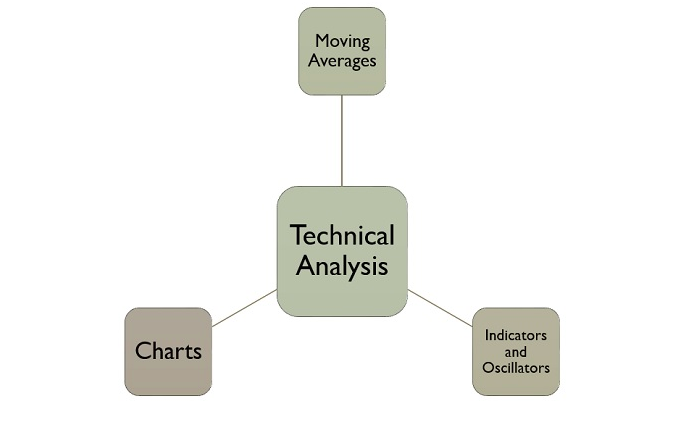
Fundamental Analysis
S, Surbhi. “Technical Analysis Chart”

Key Differences, 13 Aug. 2019, keydifferences.com/difference-between-fundamental-and-technical-analysis.html

Similarly to fundamental analysis, technical analysis aims to determine the future price of a stock. However, technical analysis examines differing data and has a varying purpose. Focusing solely on past data, technical analysis considers charts, trends, and patterns to predict the price movements of a share in the near future. This process does not evaluate the company itself, but rather it examines the market activity surrounding the investment. Technical analysis considers the price history of the share, trading volumes over time, industry trading trends, and the width of the change in price. After employing this approach to analysis, the reasons why the price of a share changes become abundantly clear. Thus, the methodology of technical analysis aims to ultimately identify the right time to exit or enter the market and is relevant for only short term investment strategies and trading.

Key Differences

Fundamental and technical analysis differ in many ways, but there are a few key differences that are important to know. As previously stated, fundamental analysis is concerned with aiding long term investment strategies, while technical analysis is utilized for short term trading strategies. The purpose of fundamental analysis is to determine the intrinsic value of a stock, while technical analysis aims to determine when to enter and exit the market.

Which One Is For Me?

Which methodology should you utilize? Well, that depends on a variety of components. For one, if you are an investor you should consider employing fundamental analysis as the process heavily relies on understanding the underlying value of a company which will ultimately drive returns. If you are a trader, you might want to apply the methodology of technical analysis as it examines recent past data to attain near future data and therefore can accurately pinpoint the right time to enter and exit the market. Don’t know if you want to be a trader or an investor? Consider the time commitment. As an investor, you will make long term investments but the effort in maintaining them is little to none. As a trader, you will make short term investments that require frequent and active participation to maintain them. Overall, both fundamental and technical analysis both have their benefits, and when used correctly, are profitable approaches.

Follow the Rules: Above the Green Line + Above 90 Relative Strength

Related Articles

Free Cash Flow

Free Cash Flow: The Ultimate Guide to Financial Strength and Dividend Sustainability

Free Cash Flow (FCF) is one of the most important financial concepts an investor can understand, yet it is also ...
Read More
DRIP - Dividend Reinvestment Plan

Dividend Reinvestment Plan (DRIP): How Automatic Reinvestment Builds Long-Term Wealth

Building Wealth Through Automatic Compounding A Dividend Reinvestment Plan—commonly referred to as a DRIP—is one of the most powerful yet ...
Read More
Reinvestment Strategy

Reinvestment Strategy: Turning Income into Compounding Wealth

The Decision That Shapes Long-Term Outcomes Every investor eventually reaches a recurring decision point: what should be done with incoming ...
Read More
Dividend Growth vs High Yield

Dividend Growth vs High Yield: Choosing the Right Income Strategy for Long-Term Investors

Income investing often begins with a simple question: How can I generate reliable cash flow from my portfolio? Yet beneath ...
Read More
Dividend Sustainability

Dividend Sustainability

Dividend sustainability is the foundation of dividend growth investing. A dividend is only valuable if it can survive stress—recessions, margin ...
Read More
Chowder Rule

The Chowder Rule: A Practical Guide to Dividend Growth Investing

The Search for a Simple but Powerful Filter Dividend investing often attracts individuals seeking income stability, compounding growth, and financial ...
Read More

Trackbacks

  1. Multiple Time Frame Strategy - Above The Green Line says:
    December 26, 2019 at 4:09 pm

    […] still trade against the dominant trend. The fundamentals of fundamental analysis, as discussed in a prior article, have a large impact on the direction of the trend and should be frequently observed. Additionally, […]

    Log in to Reply

ON ATGL

  • DashBoard
  • Weekly Commentary
  • Daily Buy / Sell Signals
  • Day Trade Setup
  • Trading Rooms

Design & Develop By Pixelvect

STRATEGIES

  • Swing Trading
  • ATGL Pick of the Week
  • Dividend Growth
  • ETF Sector Rotation
  • Dogs of the Dow

HELP

  • ATGL Trading Rules
  • FAQ
  • Account Maintenance
  • Contact US
  • Join

FOLLOW US

Instagram Linkedin Twitter Facebook

© COPYRIGHT 2024 · ABOVETHEGREENLINE.COM · ALL RIGHTS RESERVED · PRIVACY · TERMS · CONTACT · WATCHLIST · CURRENT